
French nursery rhymes
Each series carries the name of a song, and its five sheets are drawn on its theme. The words are given here in full, to sing while the sheet fills up with color.
The series
Each series carries the name of its song, and prints in any order you like.
Coccinelle demoiselle
5 sheets · 5 lines · Ages 4+
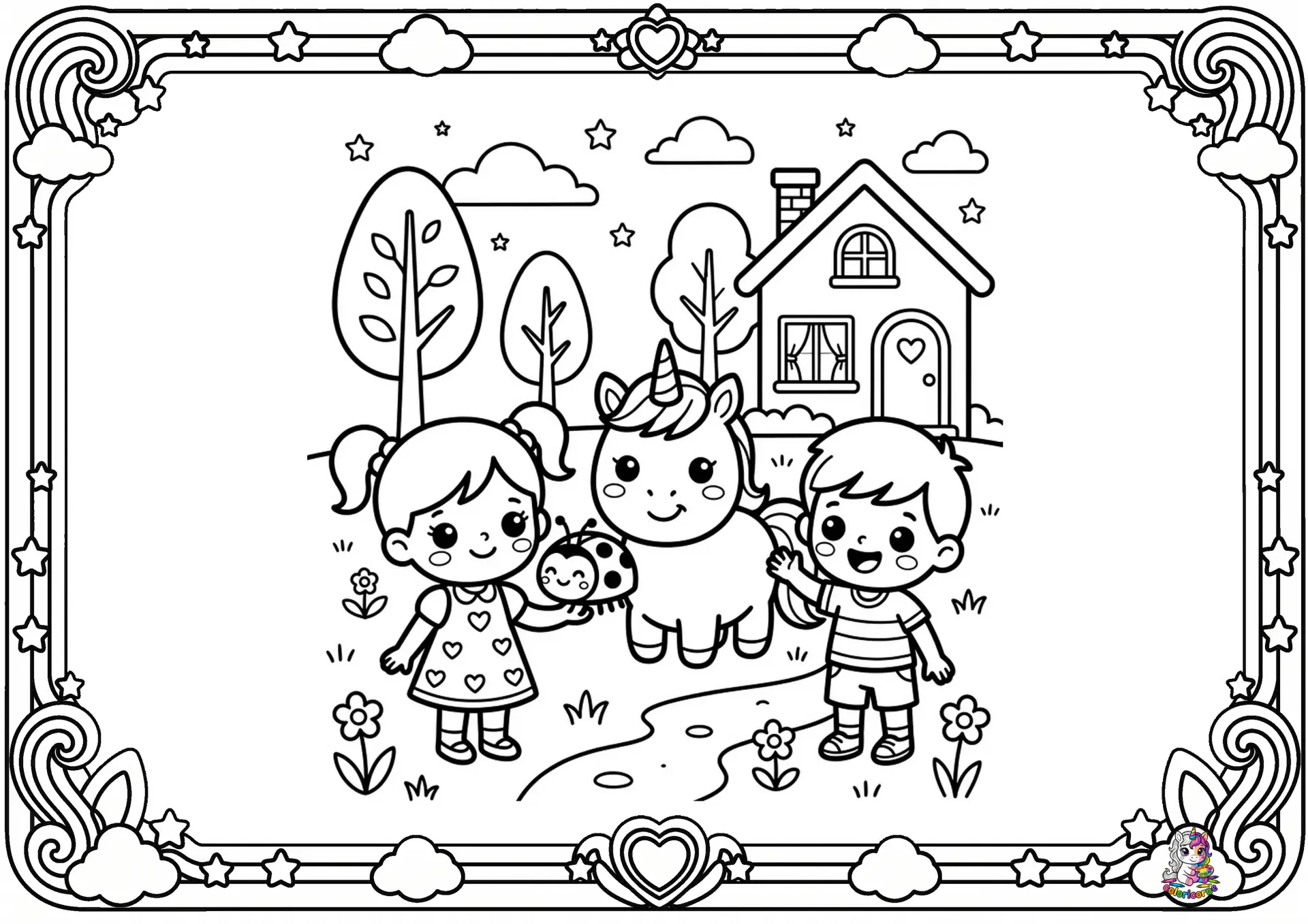
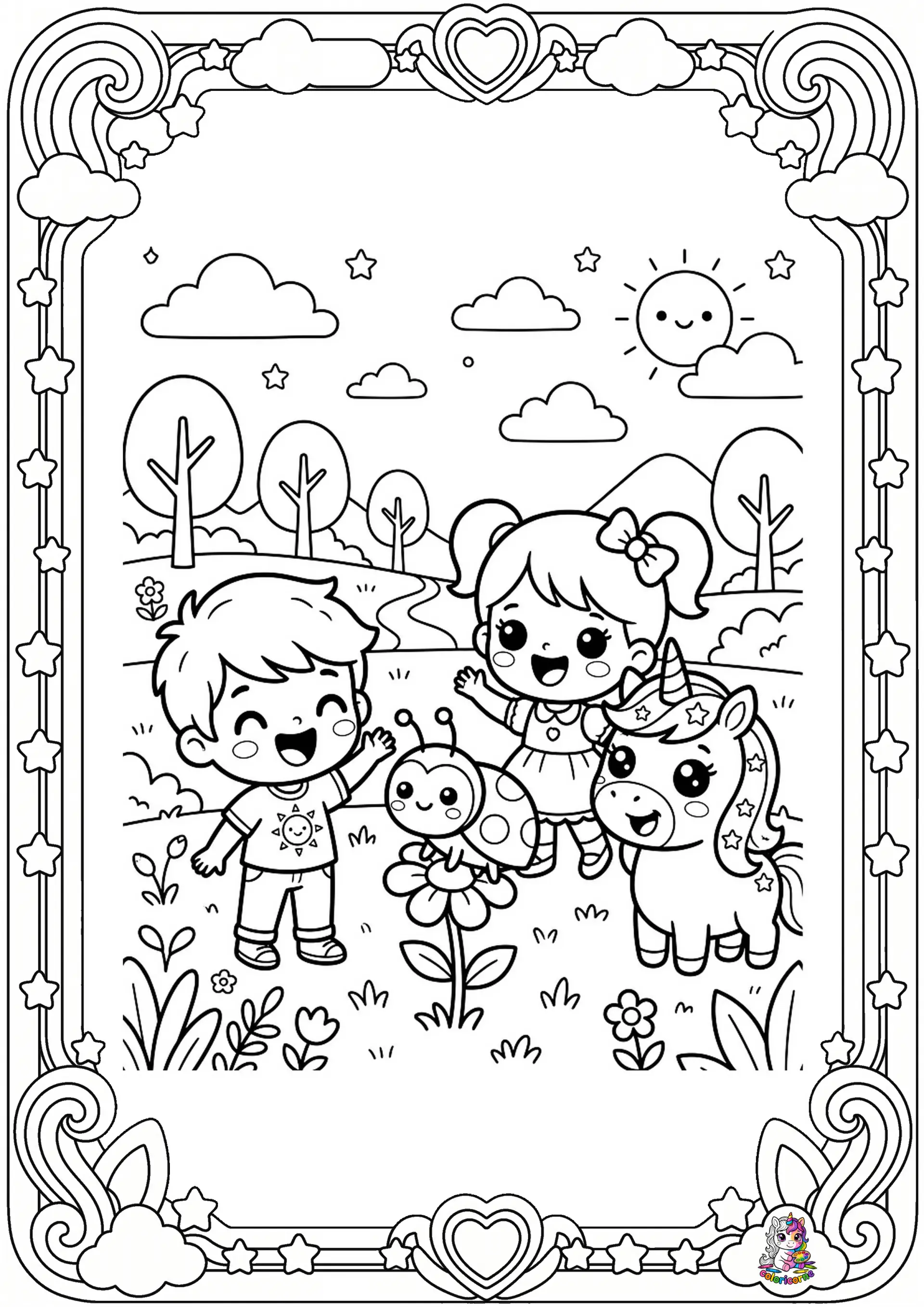
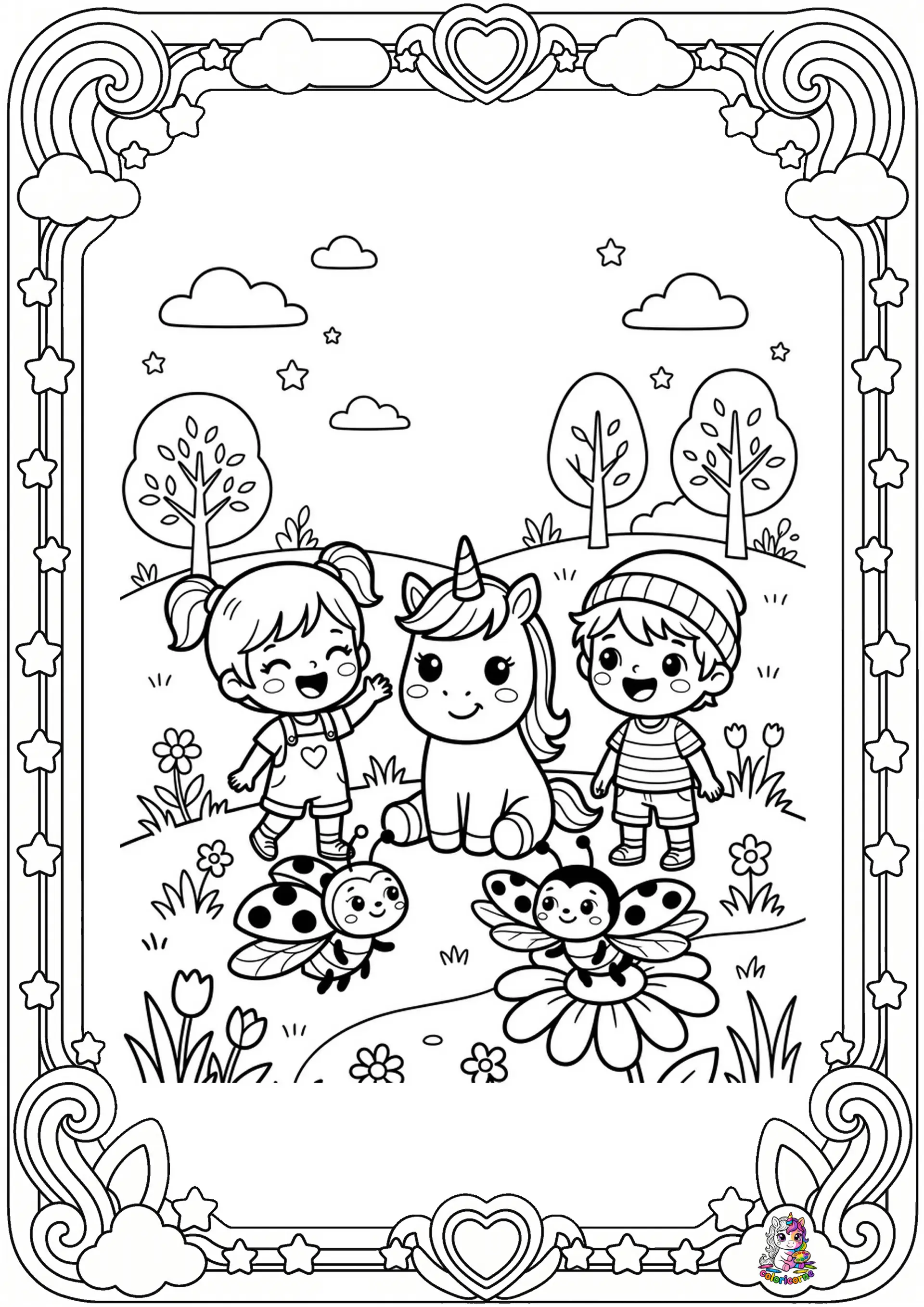
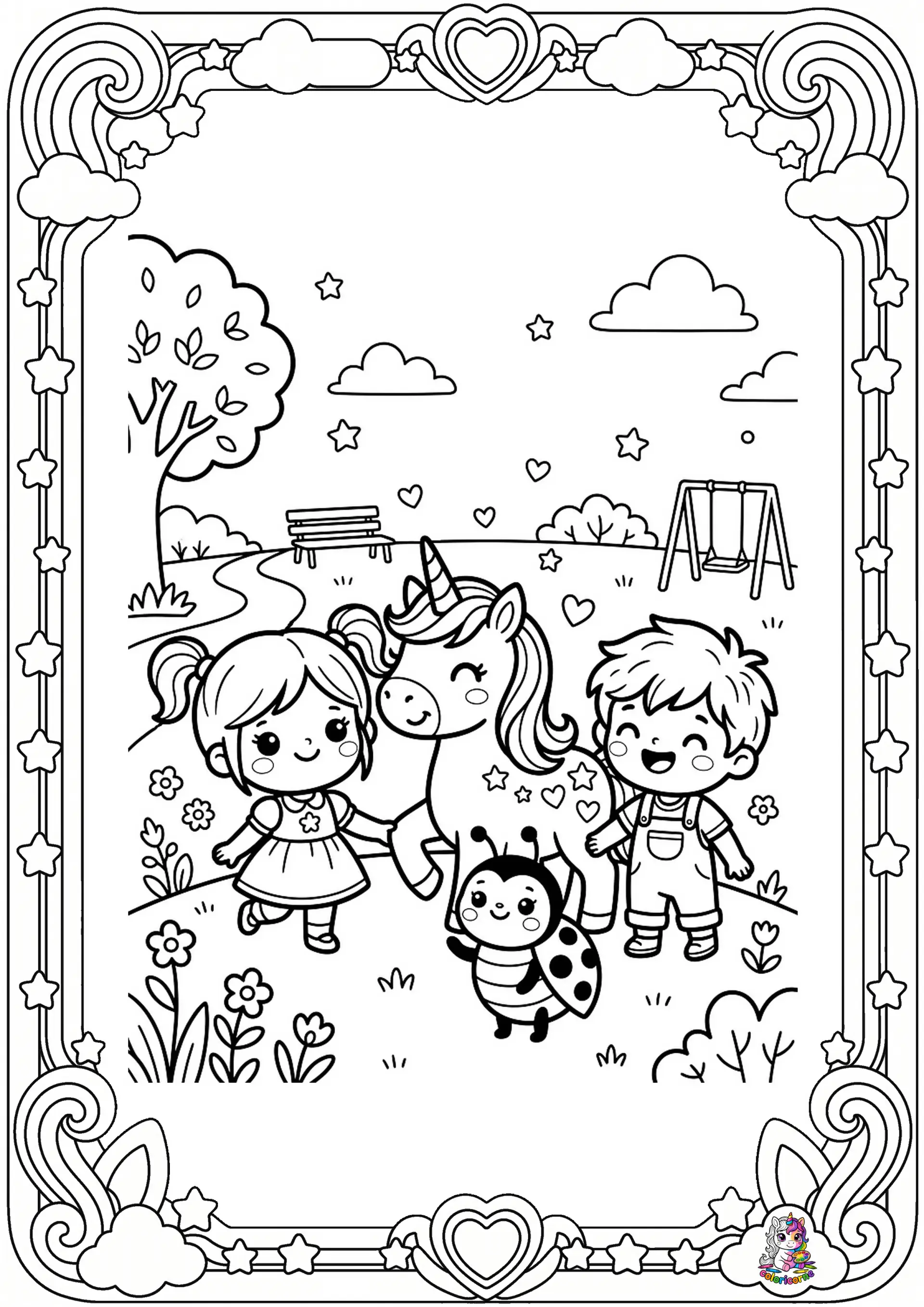
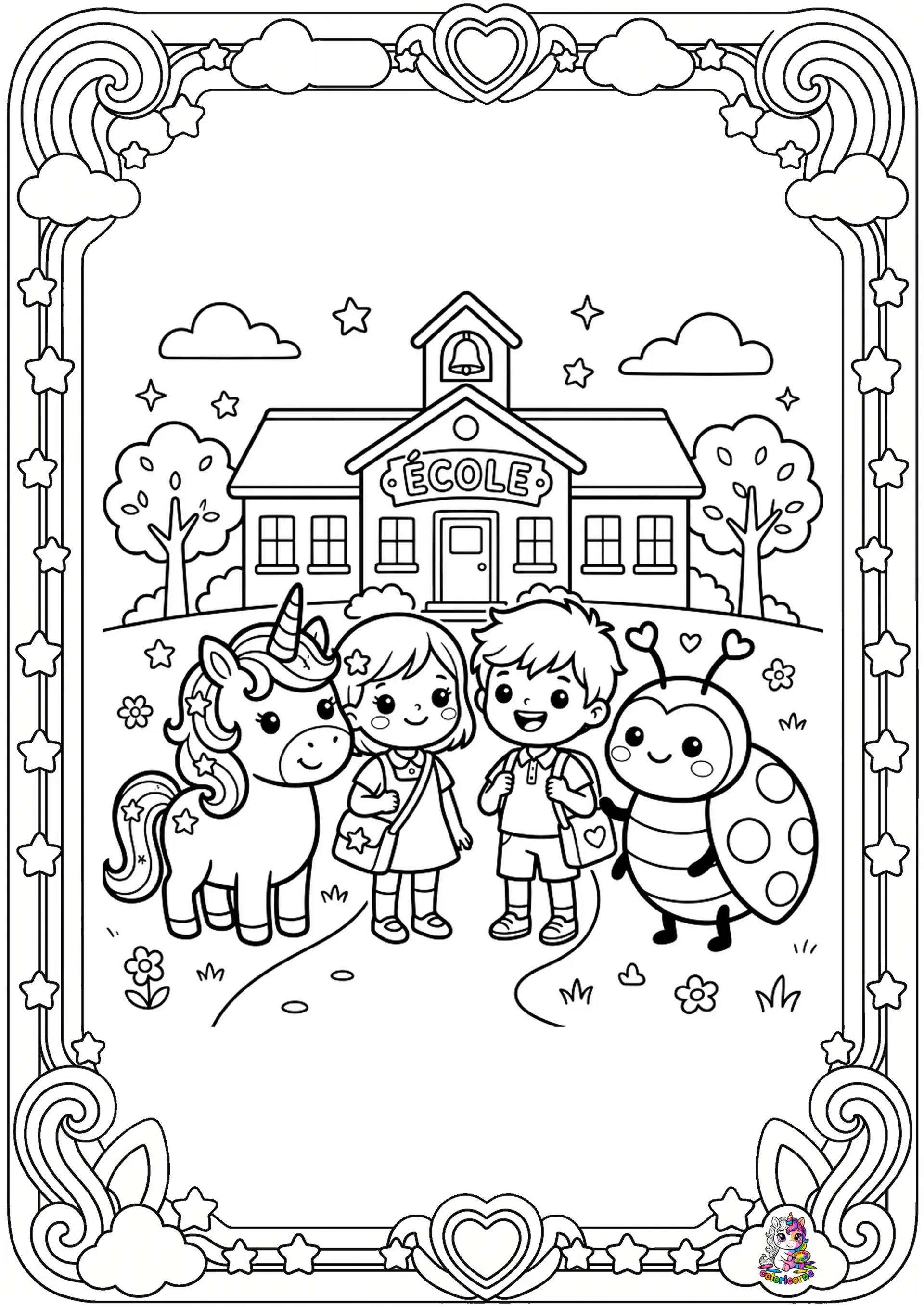
A ladybug we watch fly away: the hand, the flower, the park, the school.
Petit escargot
5 sheets · 6 lines · Ages 4+
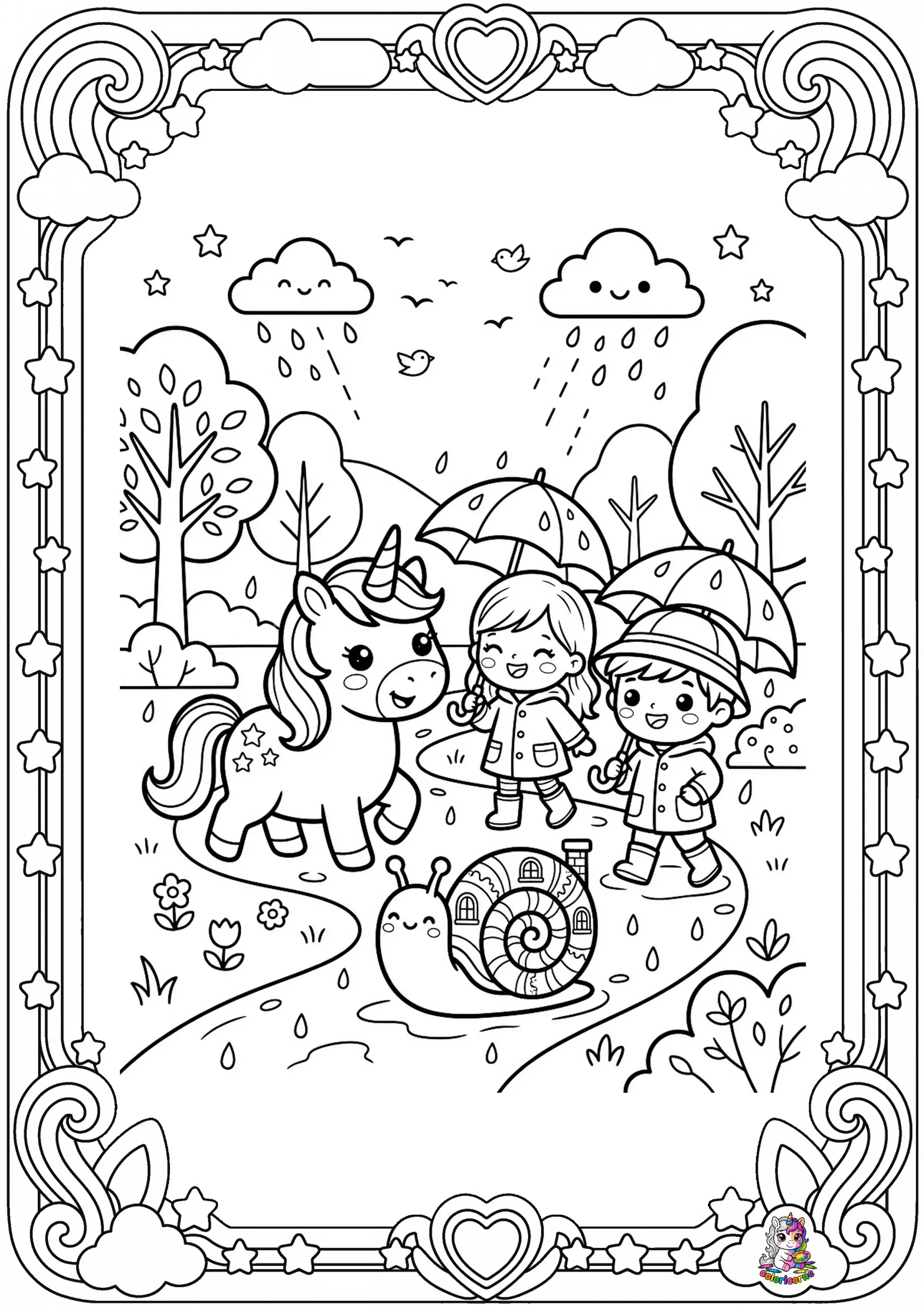
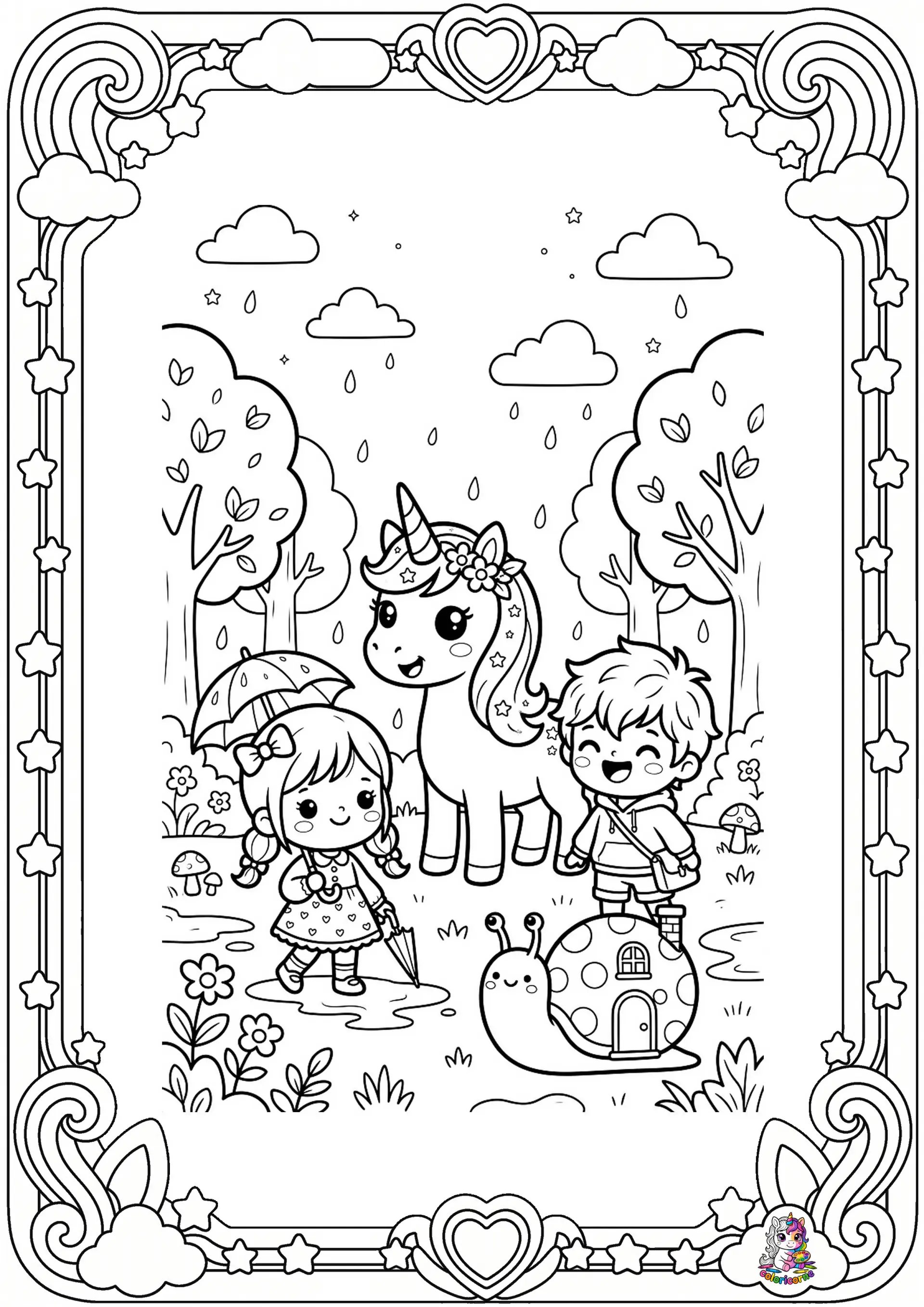
The snail, his little house on his back, the rain arriving, and the head that comes out.
Une souris verte
5 sheets · 14 lines · Ages 4+
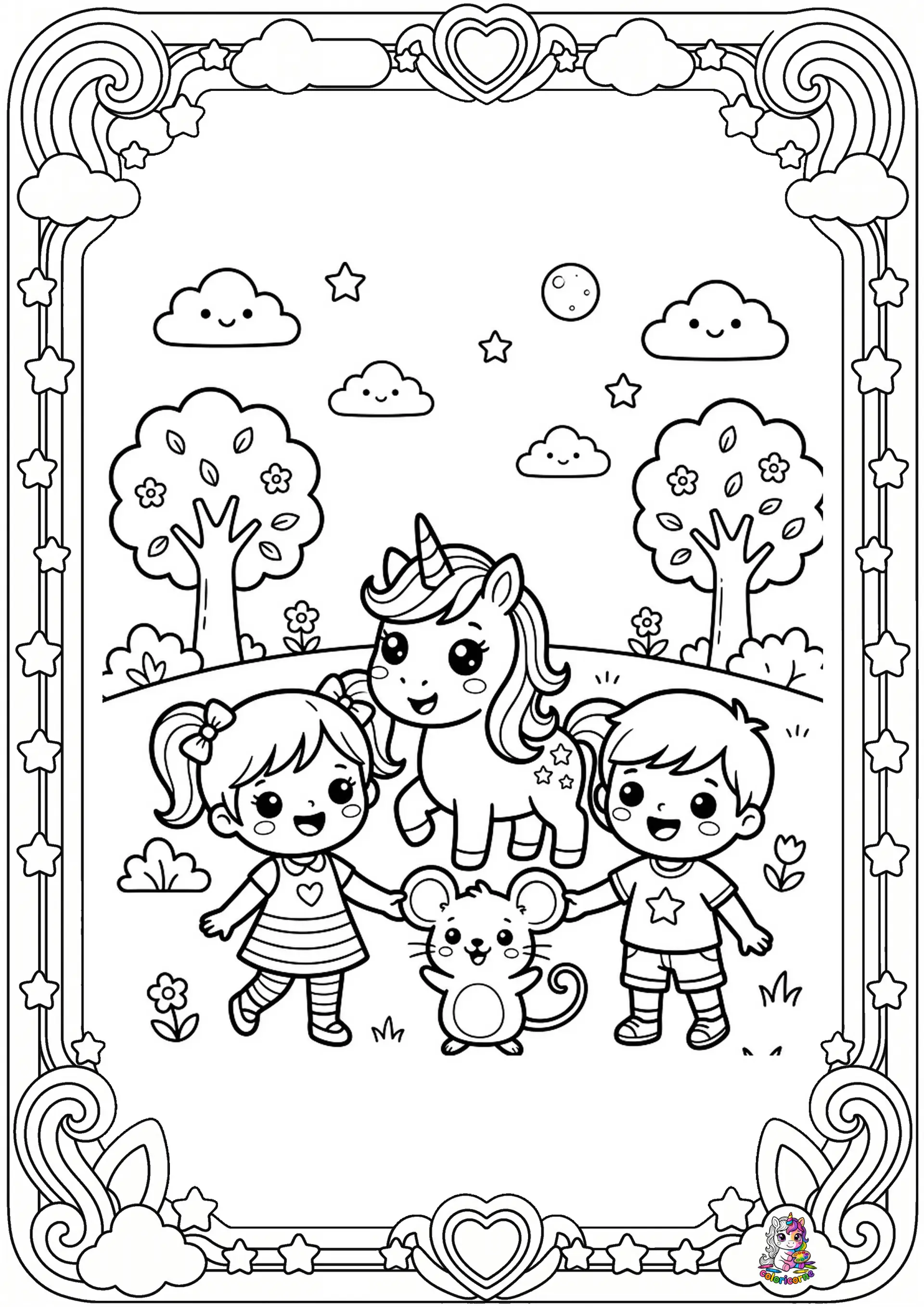
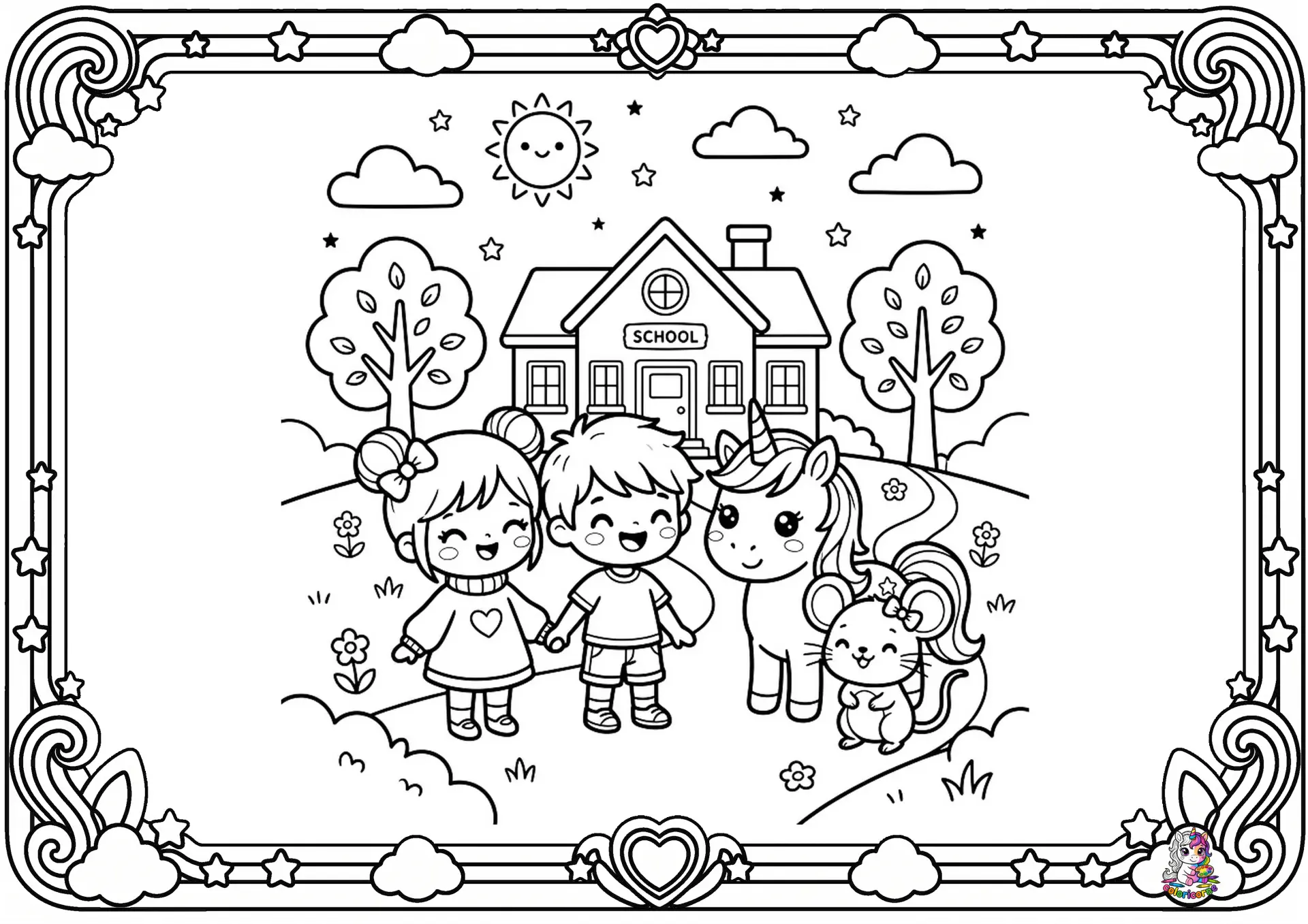
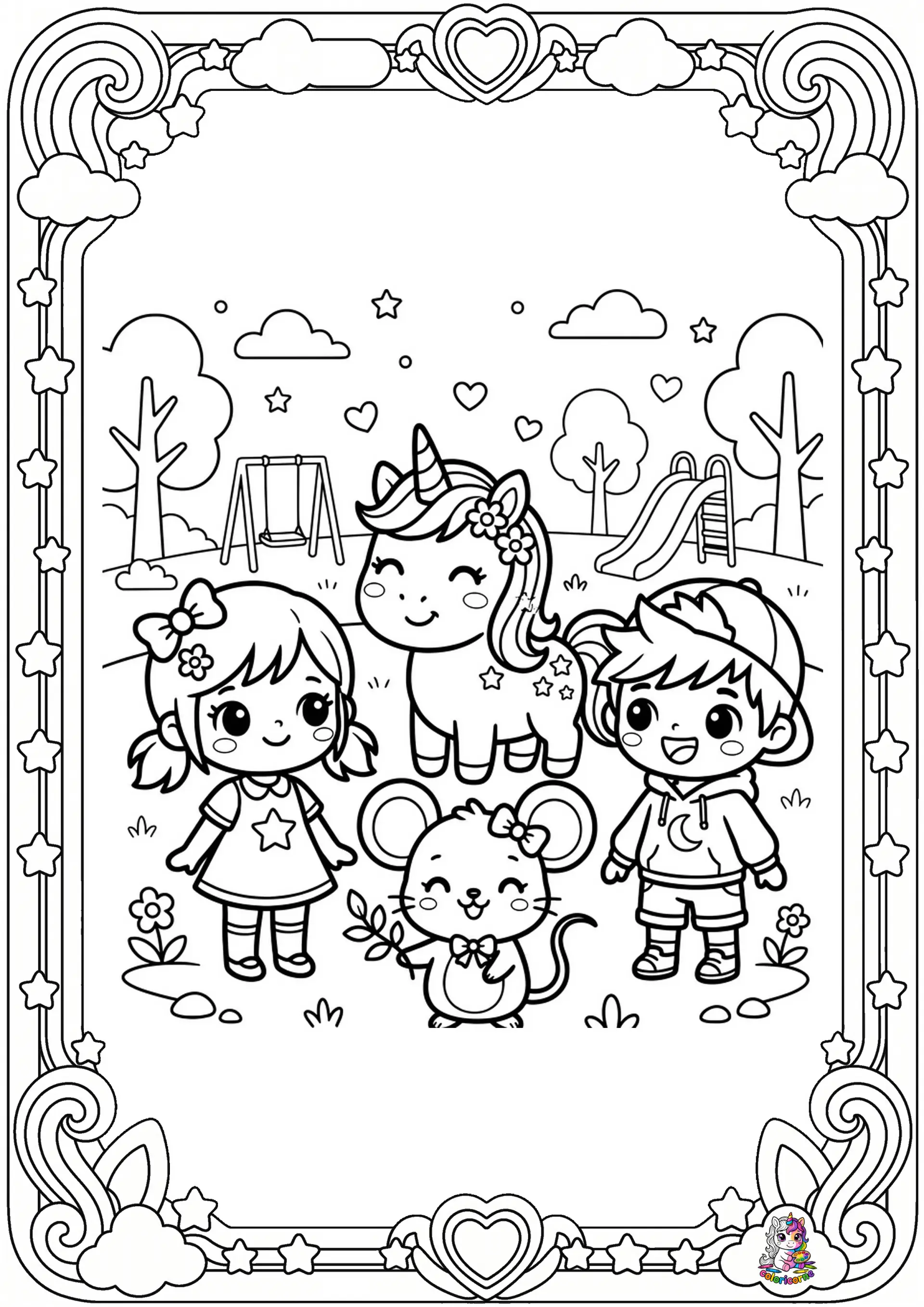
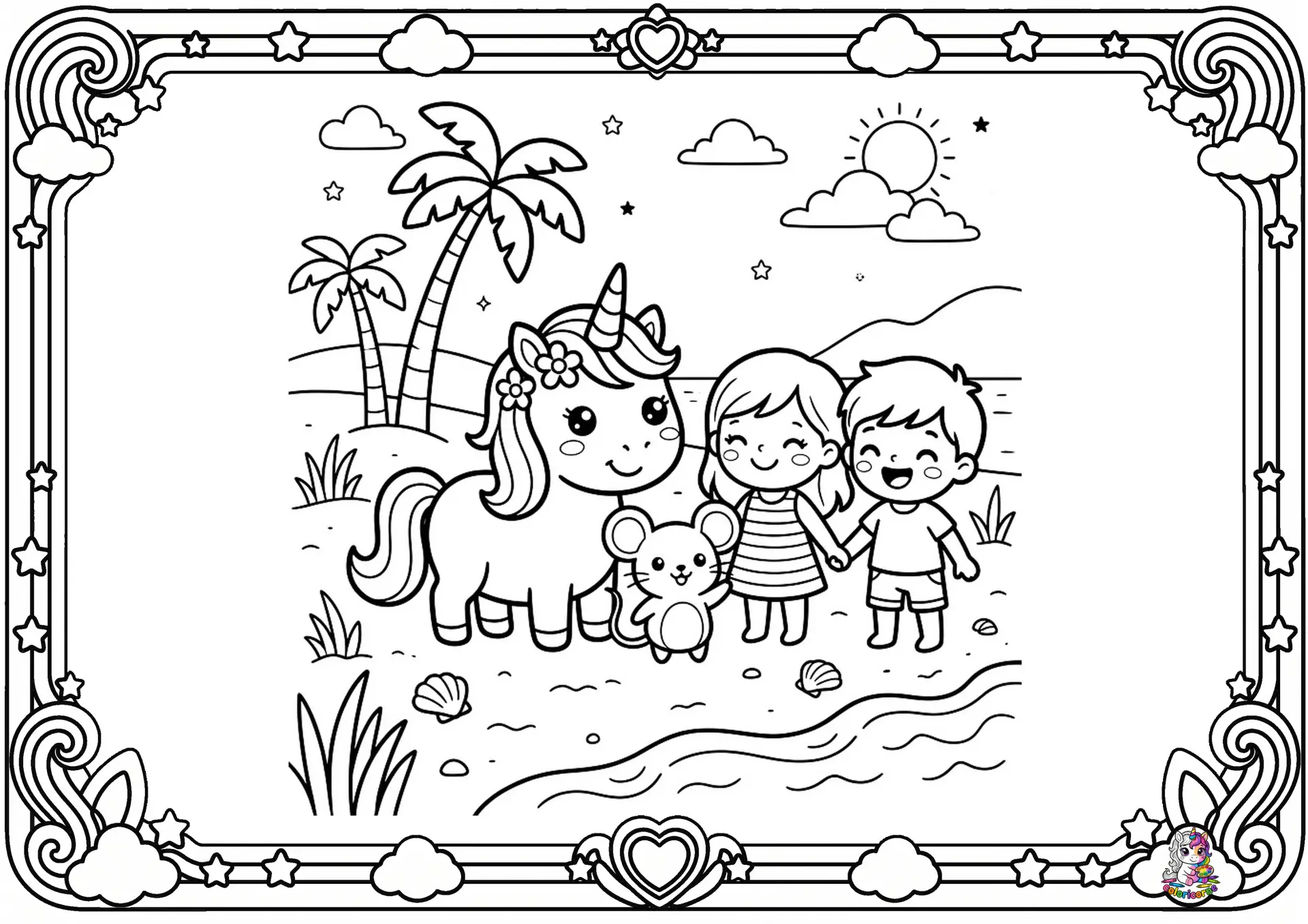
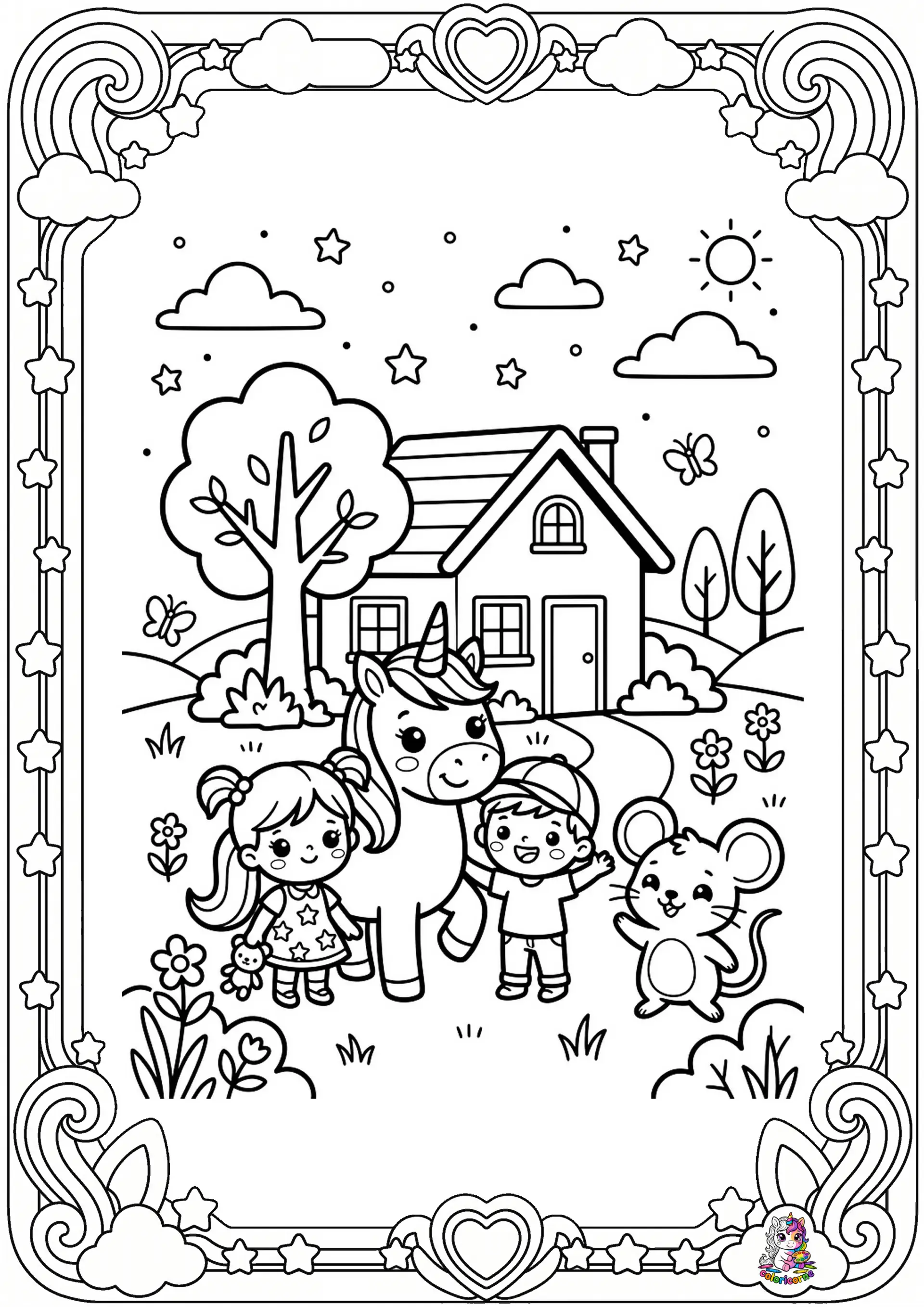
The little mouse running through the grass, at school, in the park, at the beach, then home.
The words of the songs
All three texts are given in full, to read and to sing. They are traditional nursery rhymes: they have no known author and belong to the public domain, like the tunes people pass down from one generation to the next.
You sing, the child colors, and the words stay under your eyes for as long as you need them.
The verses stay in French — they are what the child sings; next to each one, a plain-English gloss tells you what it says, so you sing the real words and understand every one of them.
Coccinelle demoiselle
A ladybug we watch fly away: the hand, the flower, the park, the school.
A French rhyme you sing to a ladybug
In France the ladybug has been called the bête à bon Dieu — “God’s little creature” — for centuries, and you never shoo her away: you talk to her. “Coccinelle demoiselle” is one of those tiny rhymes French children hand down to each other in the schoolyard, with no known author and no official version. The text shifts a little from one family to the next — which means no version of it is wrong.
What the song says
It is only a handful of lines. First you ask the ladybug to fly all the way up to the sky; then you count her spots, and the color decides what comes next: white spots, she waits; red spots, she moves; black spots, she is gone. It is a leaving song, sung to go along with the flight rather than to hold it back — and that is what makes it gentle to sing, even when the insect really does go for good.
Why toddlers love it
The last three lines are built the same way, and the rhyme lands in the same place every time: blancs and attend, rouges and bouge, noirs and au revoir. A child who speaks no French hears them coming all the same — a rhyme is a sound before it is a word — and guesses the end of a line before being able to say it. That pleasure is what makes them ask for the song again. It all happens with two hands: the open palm, the fingers closing, the hand flying off. Nothing to set on the table, nothing to prepare.
Singing it while coloring
The song counts the ladybug’s spots; the drawings follow her from a hand to a flower, then all the way to school. They are not the same pictures, and it does not matter: lay the five sheets out flat and let the child choose where to start. Sing the rhyme while they color — it is five lines long and comes round quickly, and by the third time they sing it with you. Once all five are done, they are the one who tells you where the ladybug went.
The words of “Coccinelle demoiselle”
Coccinelle demoiselle, bête à bon DieuCoccinelle demoiselle vole jusqu’aux cieux
The child greets the ladybug by her old French name, bête à bon Dieu, and asks her to fly all the way up to the sky.
Petits points blancs, elle attendPetits points rouges, elle bougePetits points noirs, coccinelle au revoir
Then you count her spots, and the color decides: white spots, she waits; red spots, she moves; black spots, goodbye, ladybug.
Traditional rhyme. 5 lines, in 2 verses.
The “Coccinelle demoiselle” series, sheet by sheetBack to the songs
Petit escargot
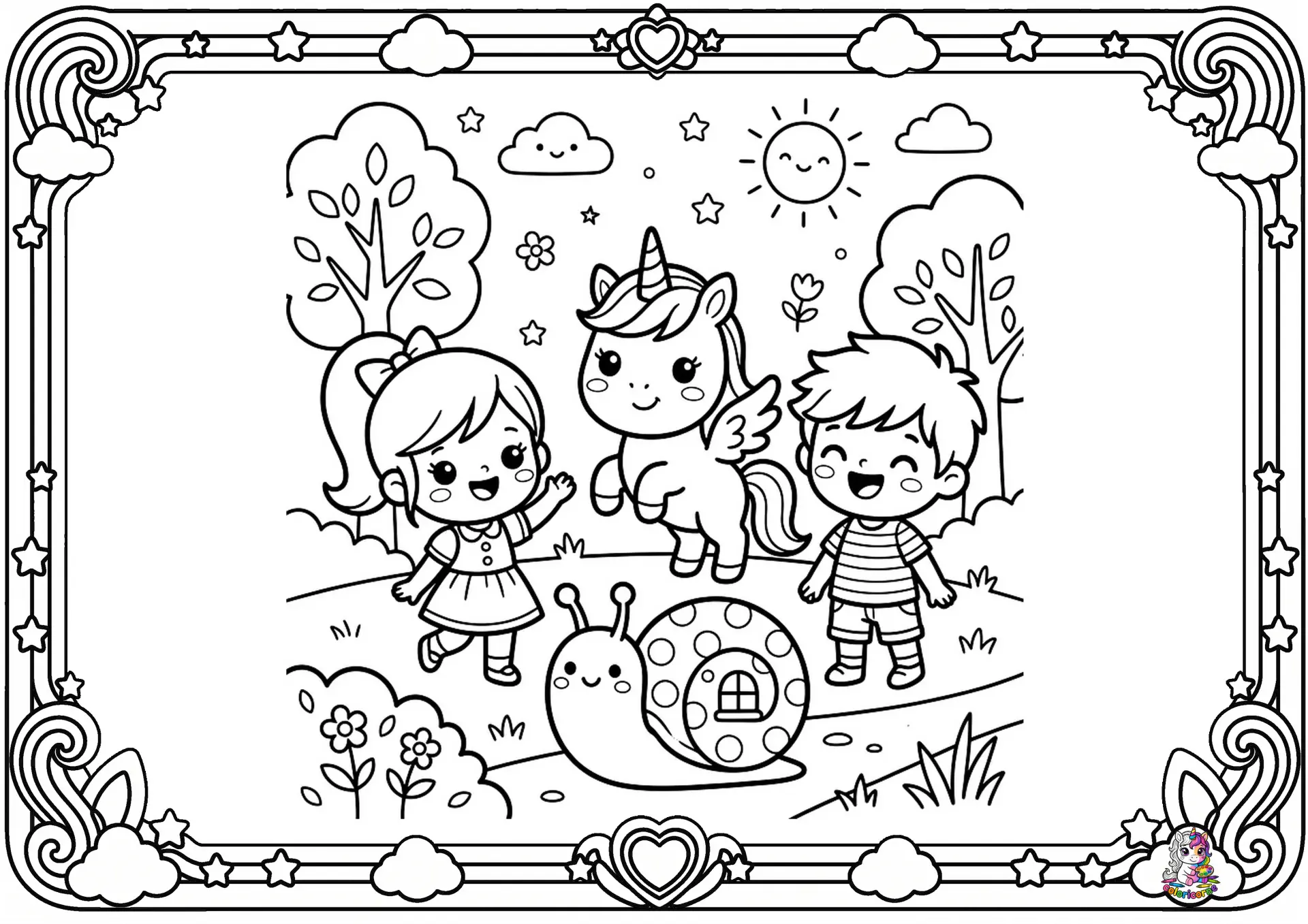
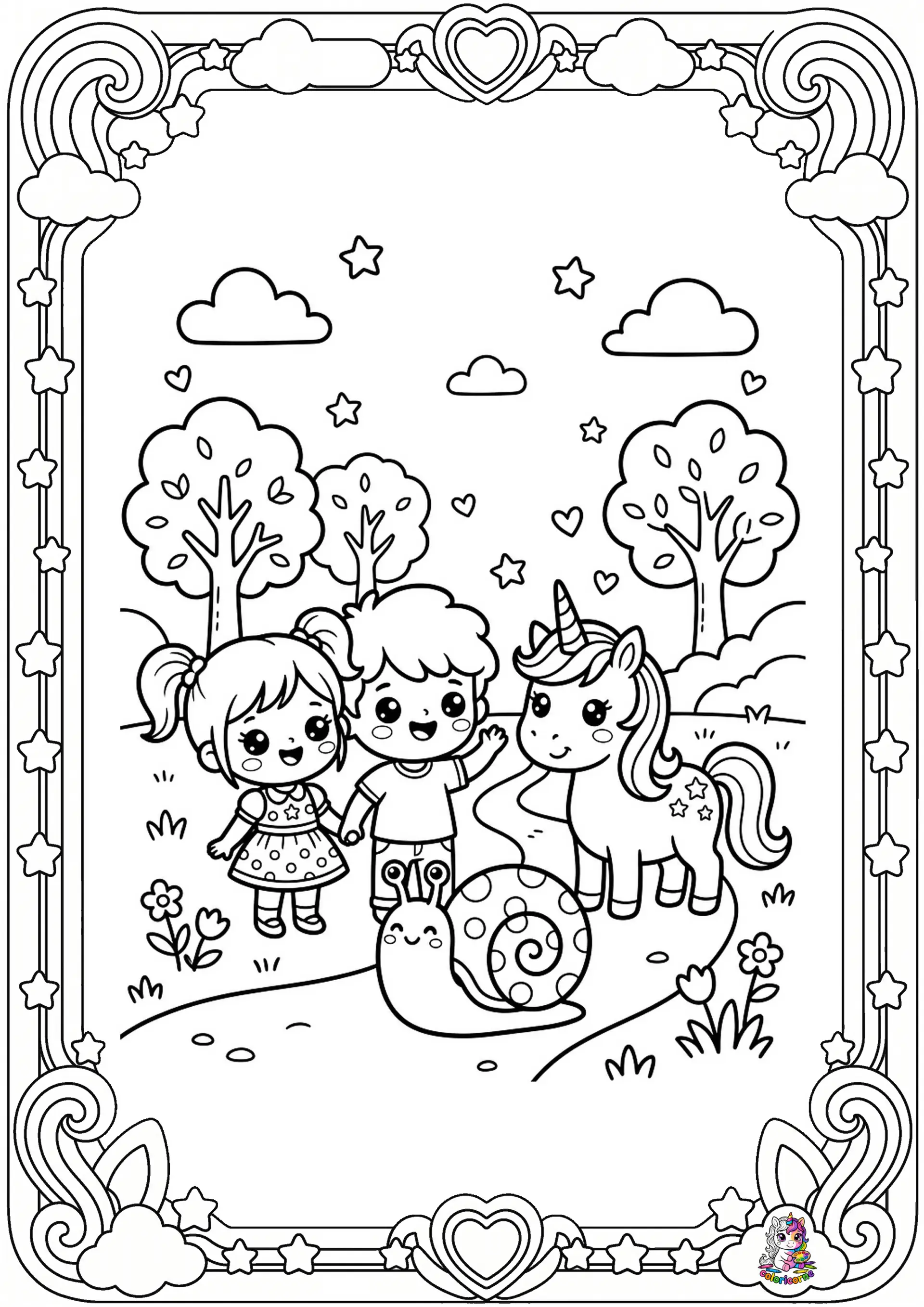
The snail, his little house on his back, the rain arriving, and the head that comes out.
A song you make with your hands
Nobody knows who wrote “Petit escargot”. It turns up in every collection of French nursery rhymes from the last century, and it travels mostly by word of mouth, in day care and in preschool. It always comes with the same gesture: a closed fist for the shell, and two fingers coming out on the last line.
Six lines, two verses
The text is one of the shortest in the French repertoire. The first verse sets up the snail and his little house; the second brings the rain, the joy, and the head that comes out. Nothing else. That is exactly what makes it easy to remember: one sentence per line, one picture per sentence, and not a single word you would have to explain to a two-year-old — in any language.
Why toddlers love it
It ends on a surprise, and the surprise always arrives. A child asks for the song for that moment, the one where two fingers come out of the closed fist. The vocabulary is entirely concrete: a back, a house, the rain, a head. Everything is shown instead of said, which is rare in a nursery rhyme and precious before the age of 3 — and it is why the song crosses borders without losing anything.
Singing it while coloring
Two of the five sheets come straight out of the song: the shower, and the head coming back out. The other three take the snail elsewhere — the shell, the walk, the school. Sing both verses while the child colors, in whatever order they like; when the rain page comes up, bring out the grays and the blues, and they link the color to the line without anyone having to say so.
The words of “Petit escargot”
Petit escargotPorte sur son dosSa maisonnette
A little snail carries his little house around on his back.
Aussitôt qu’il pleutIl est tout heureuxIl sort sa tête
As soon as it rains he is perfectly happy, and out comes his head.
Traditional rhyme. 6 lines, in 2 verses.
The “Petit escargot” series, sheet by sheetBack to the songs
Une souris verte
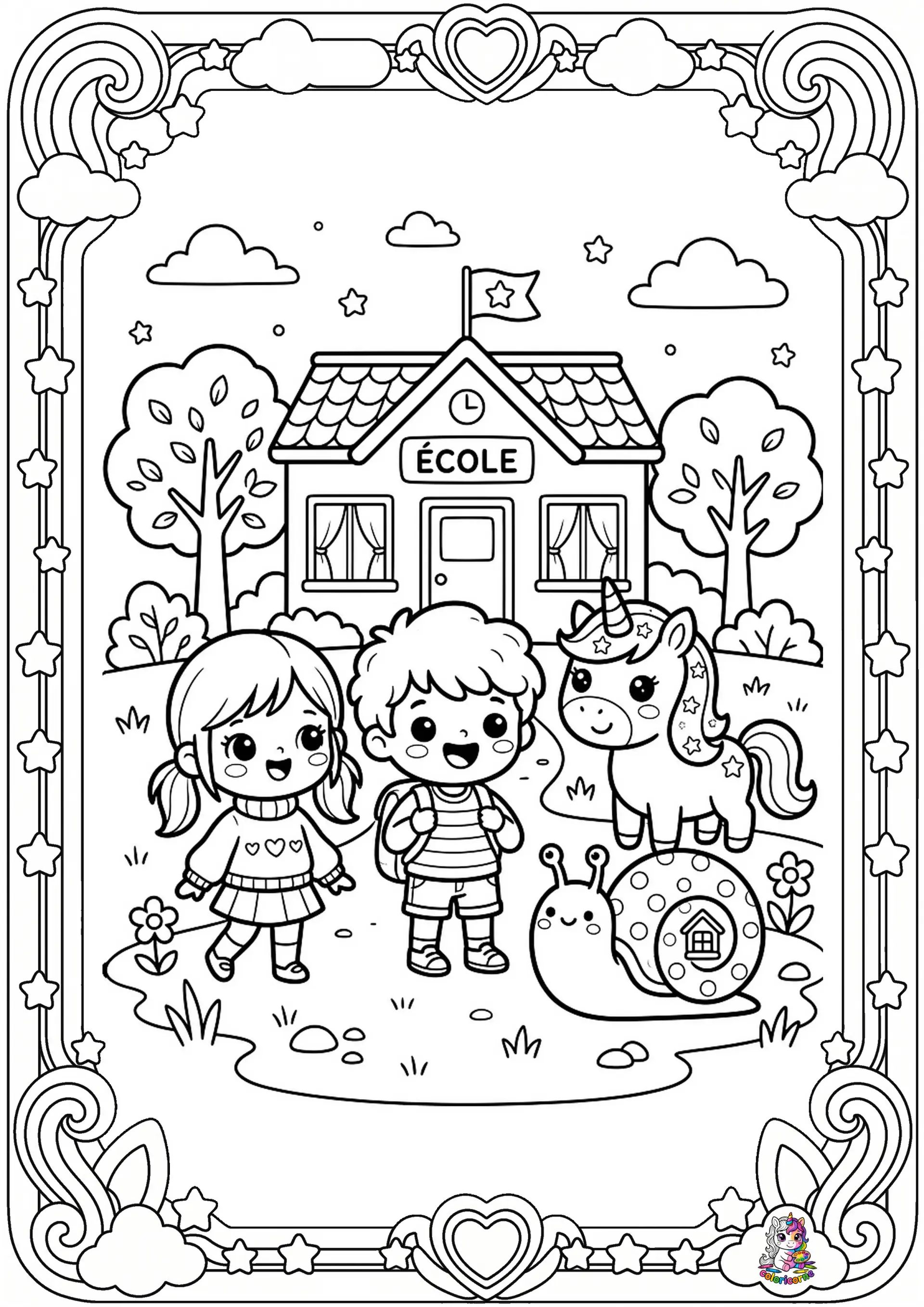
The little mouse running through the grass, at school, in the park, at the beach, then home.
The rhyme every French child knows
It has been sung in France since at least the 19th century, and it is credited with all sorts of origins, none of them established. What is certain comes down to two points: the text circulates in several versions, and almost every French adult knows the opening without ever having had to learn it. The version given here is the most widespread one, and it is the one the drawings follow.
A chain of words that means nothing
The song has no story: it has a mechanism. You catch the mouse, you show her to some gentlemen, you dip her in oil and then in water, and she turns into a piping-hot snail. Then you try her in a drawer, in a hat, in a pair of underpants, and each place earns its own answer. The meaning does not matter in the least; the seriousness with which you sing this nonsense does.
Why toddlers love it
Because of the rhymes, which you can feel coming: tiroir and noir, chapeau and chaud, culotte and crottes. They work on a child who speaks no French at all, because a rhyme is a sound before it is a word: the child hears it approach, says it with you, then before you. And the last line gets a laugh every time — that is the ending they ask for, the one they want sung three times over before agreeing to move on.
What the pages show
The drawings follow neither the drawer nor the hat: they follow the mouse through five places — the grass, the school, the park, the beach, the house. The song is a play on words; the sheets tell a day. Sing the whole rhyme first, then spread the sheets out and ask the child to tell you, in their own words, where the mouse went. It is no longer quite the same story, and that is exactly as it should be.
The words of “Une souris verte”
Une souris verte,Qui courait dans l’herbe,Je l’attrape par la queue,Je la montre à ces messieurs
A green mouse is running through the grass; the singer catches her by the tail and shows her to some gentlemen.
Ces messieurs me disentTrempez-la dans l’huileTrempez-la dans l’eau,Ça fera un escargot tout chaud
The gentlemen say to dip her in oil, then in water — and she will turn into a piping-hot snail.
Je la mets dans un tiroir,Elle me dit qu’il fait trop noirJe la mets dans mon chapeau,Elle me dit il fait trop chaud,
She is put in a drawer, where she says it is far too dark, then in a hat, where she says it is far too hot.
Je la mets dans ma culotte,Elle me fait trois petites crottes
She is put in a pair of underpants, and there she leaves three little droppings — the line that always gets the laugh.
Traditional rhyme. 14 lines, in 4 verses.
The “Une souris verte” series, sheet by sheetBack to the songs
The other songs
Several drawings around the same refrain, with no order to follow. You print one, or six.
 À la claire fontaine8 coloring pages
 Ah ! les crocodiles8 coloring pages
 Ainsi font, font, font6 coloring pages
 Alouette, gentille alouette9 coloring pages
 Au clair de la lune9 coloring pages
 Dans la forêt lointaine3 coloring pages
 Dansons la capucine7 coloring pages
 Fais dodo, Colas mon p’tit frère6 coloring pages
 Frère Jacques10 coloring pages
 Il était un petit homme4 coloring pages
 Il était un petit navire6 coloring pages
 Il était une bergère3 coloring pages
 L’araignée Gipsy4 coloring pages
 La famille Tortue6 coloring pages
 La mère Michel4 coloring pages
 Le bon roi Dagobert4 coloring pages
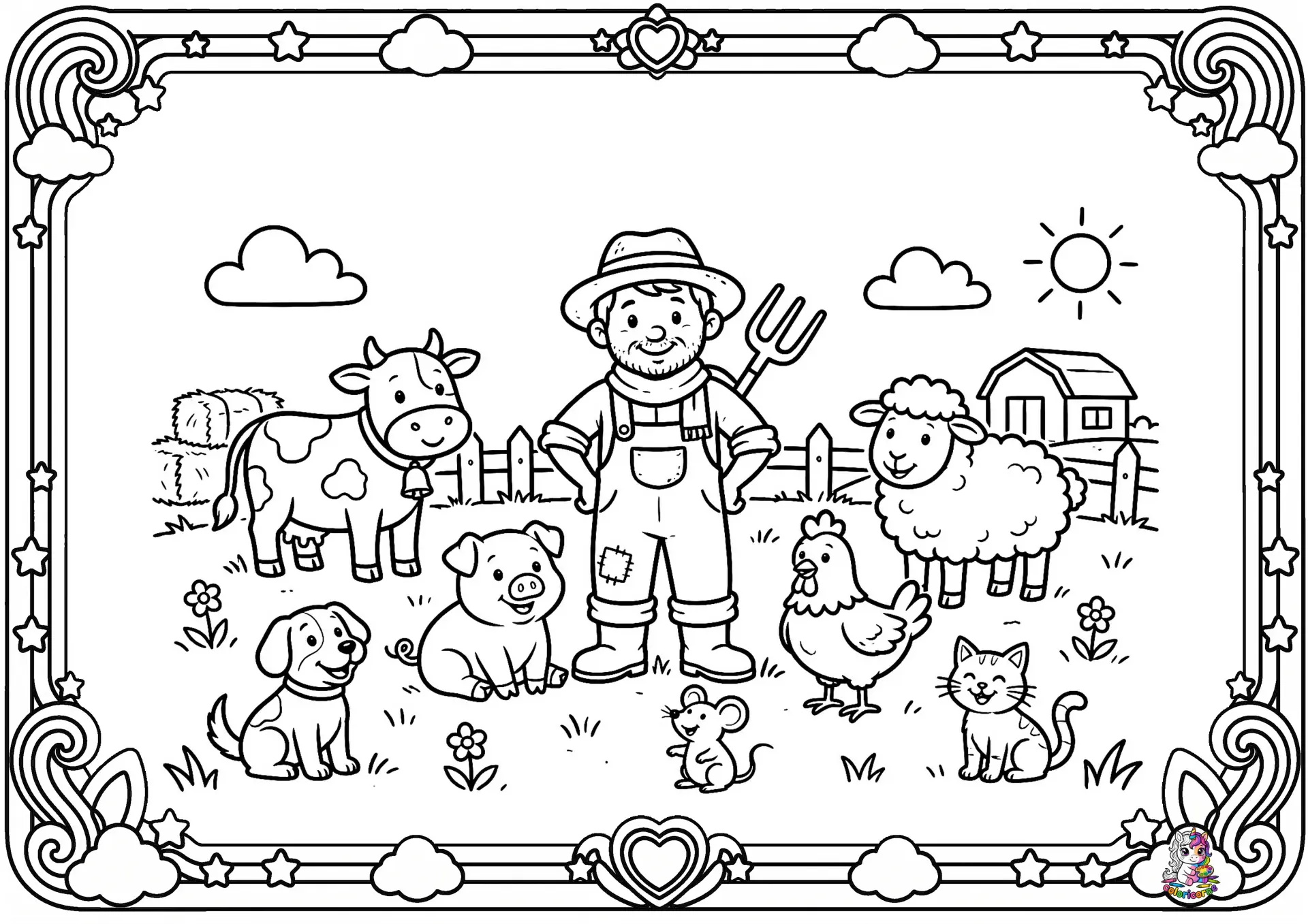 Le fermier dans son pré2 coloring pages
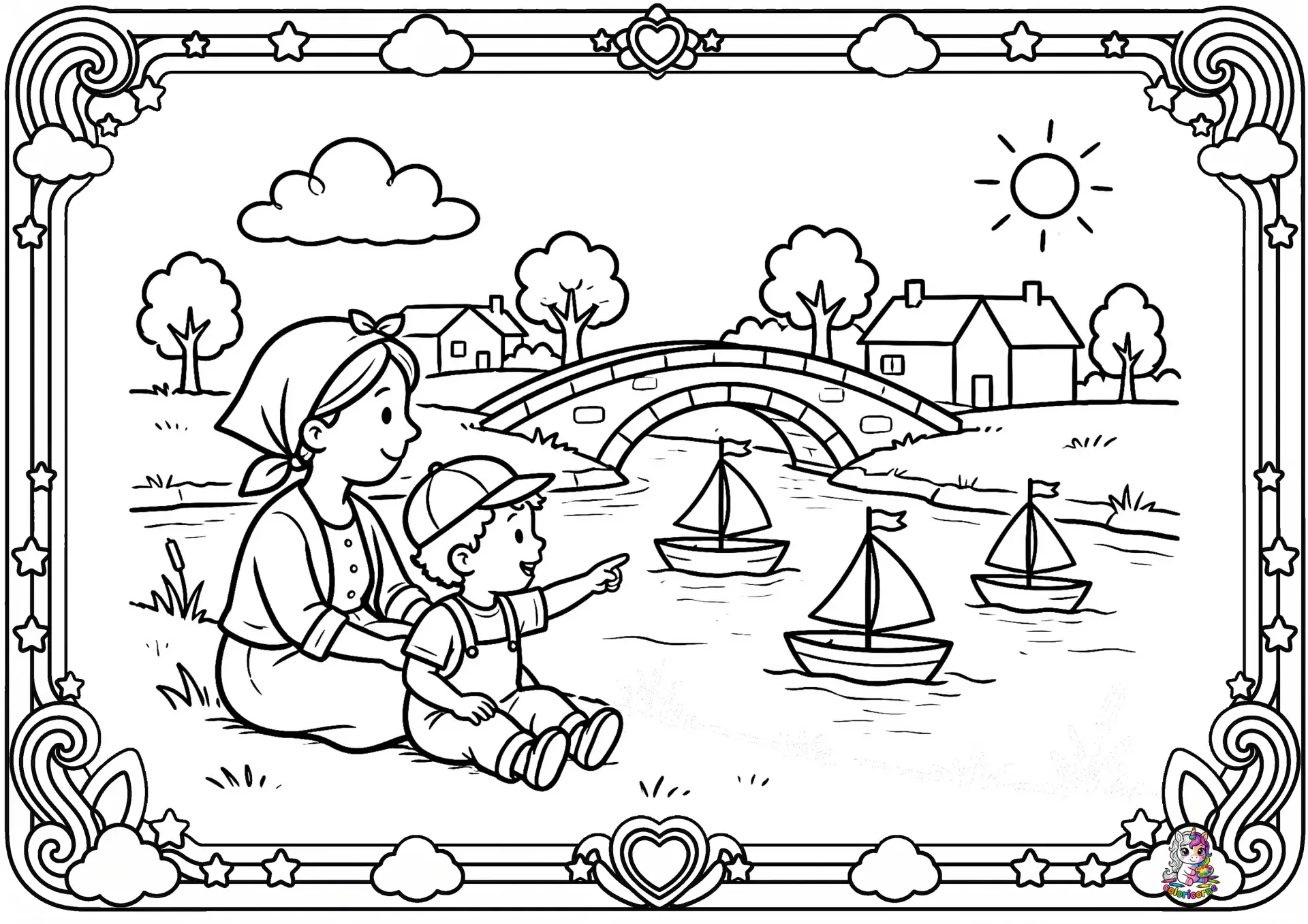 Maman, les petits bateaux5 coloring pages
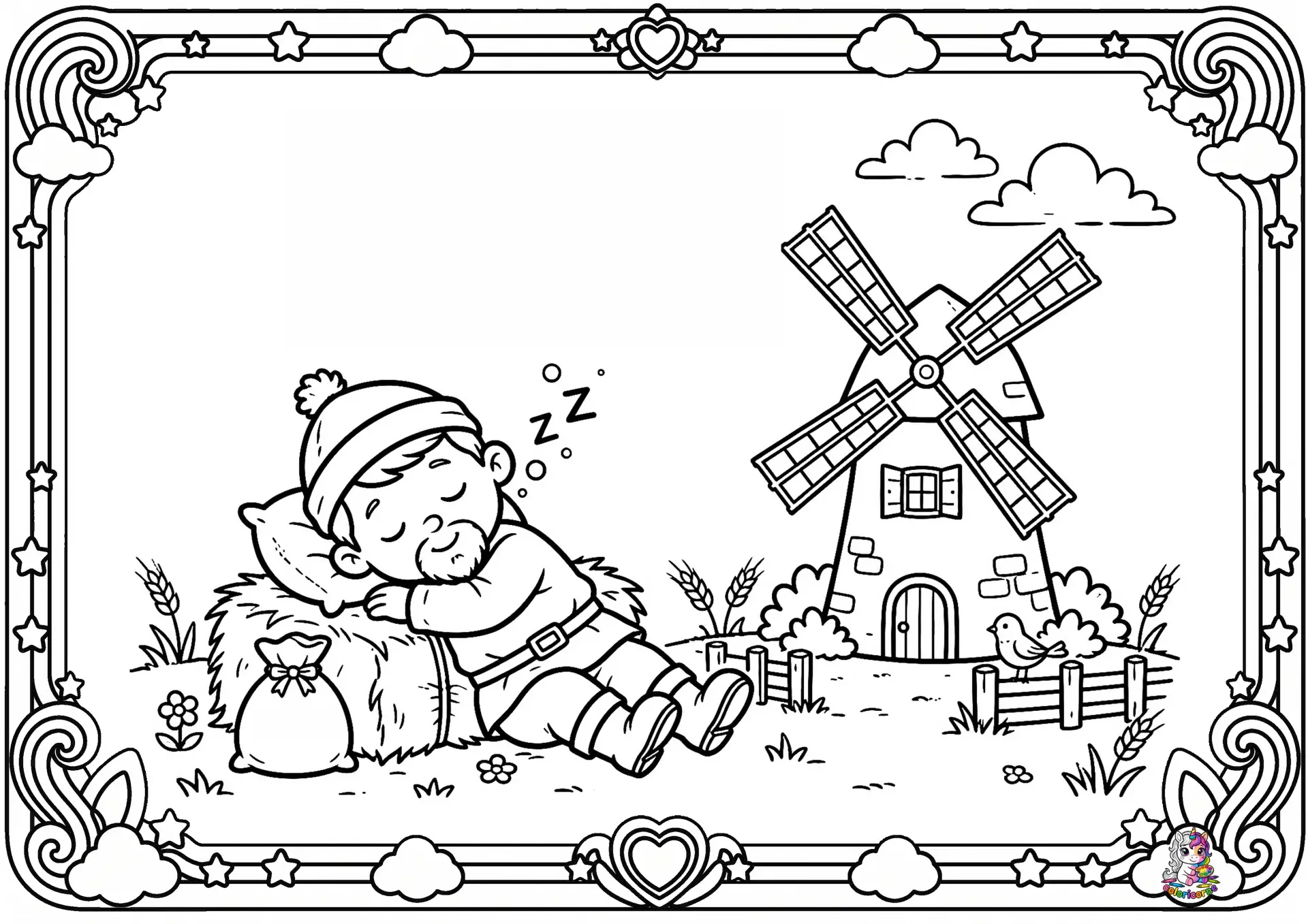 Meunier, tu dors6 coloring pages
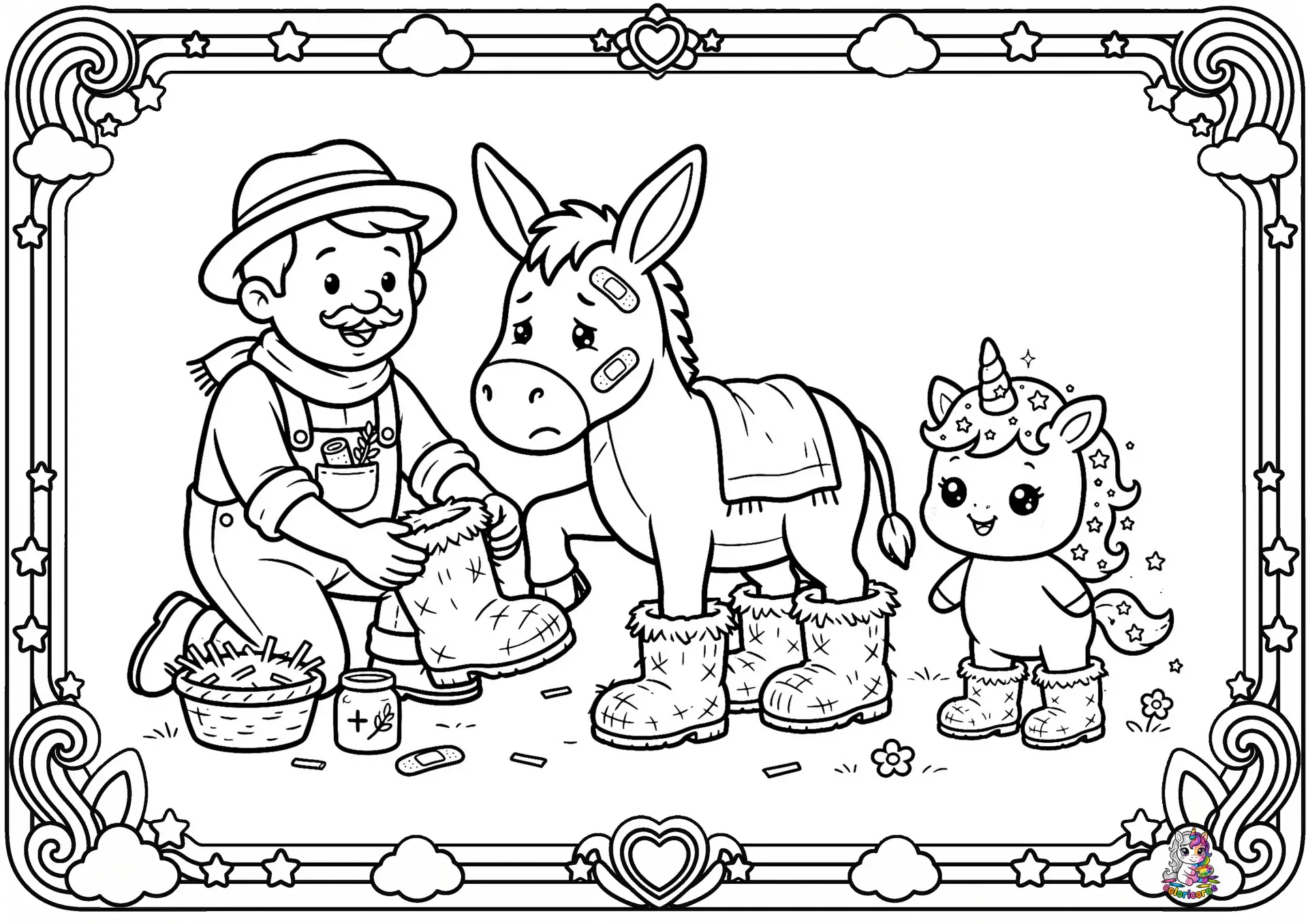 Mon âne2 coloring pages
 Pirouette, cacahuète6 coloring pages
 Pomme de reinette et pomme d’api6 coloring pages
 Promenons-nous dans les bois4 coloring pages
 Savez-vous planter les choux ?10 coloring pages
 Sur le pont d’Avignon11 coloring pages
 Un éléphant qui se balançait2 coloring pages
 Une poule sur un mur4 coloring pages
The rest of the catalog sorts by theme, by age and by season. To see everything at once, there’s the whole catalog.
What you do with a series
Three ways to use them that ask for nothing but a table and some crayons.
Lay all five sheets out
On the table or on the floor, all at once. The same character comes back from one sheet to the next, and the child tells you themselves what happens in between — there is no right answer to find.
Sing while they color
The rhyme is a few lines long and comes round quickly. You sing, they fill in — and by the third time round they sing it with you without lifting the pencil.
Find what comes back
Once all five are done, spread them out and look together for what shows up on every one: the character, a color, a detail. It is an observation exercise in disguise, and it buys ten more minutes.

Many of these nursery rhymes can also be sung in the app: coloring on screen, a video as a reward, karaoke.