
Schools, daycare and group settings
Everything on this site prints for a whole class, with nothing to ask anyone. Here is what that covers, and a unit ready to run.
Group use, in plain words
What is allowed, what is not, and what the sheets work on in class.
Nothing to ask for, nothing to sign
The sheets print and photocopy as many times as you need, for a group, a class or a whole school. No account to create, no email address to leave, no license to buy. Thirty copies of the same sheet: that is what they are for.
What is allowed
Printing and photocopying for your children, putting a sheet up on the board, gluing it into a learning journal or an end-of-year portfolio, sending it home with a note to families. The drawing a child colors belongs to that child: it goes home, it goes on the wall, it gets photographed.
The only limit is commercial
Do not resell the files, and do not put them up for download on another site. Everything else is free for group use — a classroom, an after-school club, a library, a drop-in daycare, a home childcare provider.
What the sheets work on
Each series gives five scenes around a French nursery rhyme. With nothing to prepare, that gives language work — naming, retelling, justifying a choice — and fine motor work: wide areas at 2 and 3, smaller ones at 4 and 5. The rhyme itself is French and stays French; the pictures speak on their own.
Picking the right level
Sheets marked “Ages 2+” suit the 2- and 3-year-olds: big surfaces, thick outlines, no small detail anyone has to do. Sheets marked “Ages 4+” are for the 4s and 5s: windows, a clock, clothes, plenty of small areas to stay inside.
The catalog filters by age: 2 – 3 years for the youngest groups, and 4 – 5 years for preschool and kindergarten.
A unit in 5 sessions
A series is five sheets drawn on the theme of one French nursery rhyme. The unit below follows “Coccinelle demoiselle”, one session per sheet, one sheet per week. It transfers as it is to “Petit escargot” and “Une souris verte”.
- Session 1
Listen and name
- Goal
- Get into the story, and name what is on the picture.
- Materials
- One sheet per child, thick markers or wax crayons.
- Time
- 20 minutes, 15 of them coloring.
Sing the rhyme twice if you know it, then show the sheet before handing out any crayons. The children name what they recognize: the wide open hand, the ladybug sitting in the palm, the house with the pointed roof, the path running down to the bottom of the page. Then color, with no rule about neatness — this session is not graded.
- Session 2
Coloring to a rule
- Goal
- Hold one sorting rule all the way to the end of the sheet.
- Materials
- One sheet per child, one box of markers for every four.
- Time
- 25 minutes.
One rule only, said before anyone starts: every flower the same color. It is a sorting exercise as much as a coloring one — the child has to spot the flowers first, then stick to it. At the end, lay the sheets side by side: the rule either shows, or it doesn’t.
- Session 3
Look at the detail
- Goal
- Compare two things that are nearly alike, and say out loud why.
- Materials
- One sheet per child, colored pencils, in groups of six.
- Time
- 30 minutes.
The two ladybugs have opened their wings: one sits in the grass along the path, the other balances on a big daisy. Each child decides whether to make them the same or different, and says why before picking up a pencil. Talking comes before color.
- Session 4
The big scene
- Goal
- Fill a whole sheet, and work together on one background.
- Materials
- One sheet per child, plus one A3 enlargement per table.
- Time
- 40 minutes, split in two if needed.
This is the biggest scene of the five. Each child first picks the spot in the drawing where they would stand, and starts from that corner. The background — the sky, the grass, the paths — is done together on the A3 enlargement in the middle of the table, while the others finish their own sheet.
- Session 5
Invent the order, then defend it
- Goal
- Put the five pictures into a story, and justify the order chosen.
- Materials
- The sheets of the series enlarged to A3, magnets, the board.
- Time
- 30 minutes.
Color the last sheet, then put all five up on the board, shuffled. The drawings do not follow the rhyme — it counts the ladybug’s spots, while they show her in a hand, on a flower, at the park, outside the school. So there is no order to recover, and that is what makes the session worth it: the class proposes one, and each child says why theirs holds. Sing the rhyme through, settle on one frieze, and leave it up for the families.
The sheets are gathered on the series page: Coccinelle demoiselle. The other rhymes are cut the same way — see the series.
The sheets that hold a group
Not every sheet behaves the same way with twenty-five children. Here are the ones that work, and why.
At the park with the unicorn
Ages 4+
A whole scene: a background, paths, several characters. Two children can work on it at once, one on the background, the other on the characters. Nobody waits their turn, and the page moves fast.
The park under the stars
Ages 6+
The swing on the left, the slide on the right, a sky full of stars: three big areas the youngest fill in one stroke. At 2 and 3, a page that moves fast is a page that gets finished.
Everyone off to school
Ages 6+
The school takes up the top half of the sheet: scalloped roof tiles, a round clock, windows with tied-back curtains. Plenty of small areas to stay inside — this is the sheet for the 4s and 5s, and it fills a whole session.
The ladybug
Ages 4+
One creature, drawn big, in the middle of the page, and nine well-separated spots. The sheet to run off in thirty copies when you need a quiet activity with nothing prepared.
Printing a class set without losing your evening
Five habits that save time when you need thirty copies.
- Print the PDF once, then photocopy. The outline is solid black: it loses nothing in the copier, and it is your own ink you are saving.
- Enlarge to A3 for group work: the areas double in surface, and two or three children fit around the same sheet without getting in each other’s way.
- Print all the sheets of a series in one go and keep them in a folder per table: the unit is ready for 5 weeks, and there is nothing left to prepare on a Sunday evening.
- Plain paper is enough for markers and pencils. Move to 120 gsm if the children paint, glue or cut: a thin sheet buckles as soon as it gets wet.
- Write the name on the back before handing the sheets out. Thirty unnamed drawings on a desk at the end of the day is half an hour lost.
Questions from teachers and early-years staff
Can I photocopy a coloring page for the whole class?
Yes, as many times as you need. Thirty copies of the same sheet, in one class or across a whole school: that is the intended use, and there is nothing to ask for.
Do I need permission or a license to use these pages at school?
No. No account, no email address, no license to buy. The only limit is commercial: do not resell the files, and do not put them up for download on another site.
Which sheets work with 2- and 3-year-olds?
The ones marked “Ages 2+”: big surfaces, thick outlines, no small detail anyone has to do. The page still looks good with the details left white, and that is what lets a 2-year-old finish it.
Can I glue a coloring page into a learning journal?
Yes, and into an end-of-year portfolio or a note home. The drawing a child colors belongs to that child: it goes home, it goes up in the corridor, it gets photographed.
The sheets to take to class
The series behind the unit, the school sheets, and a few safe bets for a quiet workshop.
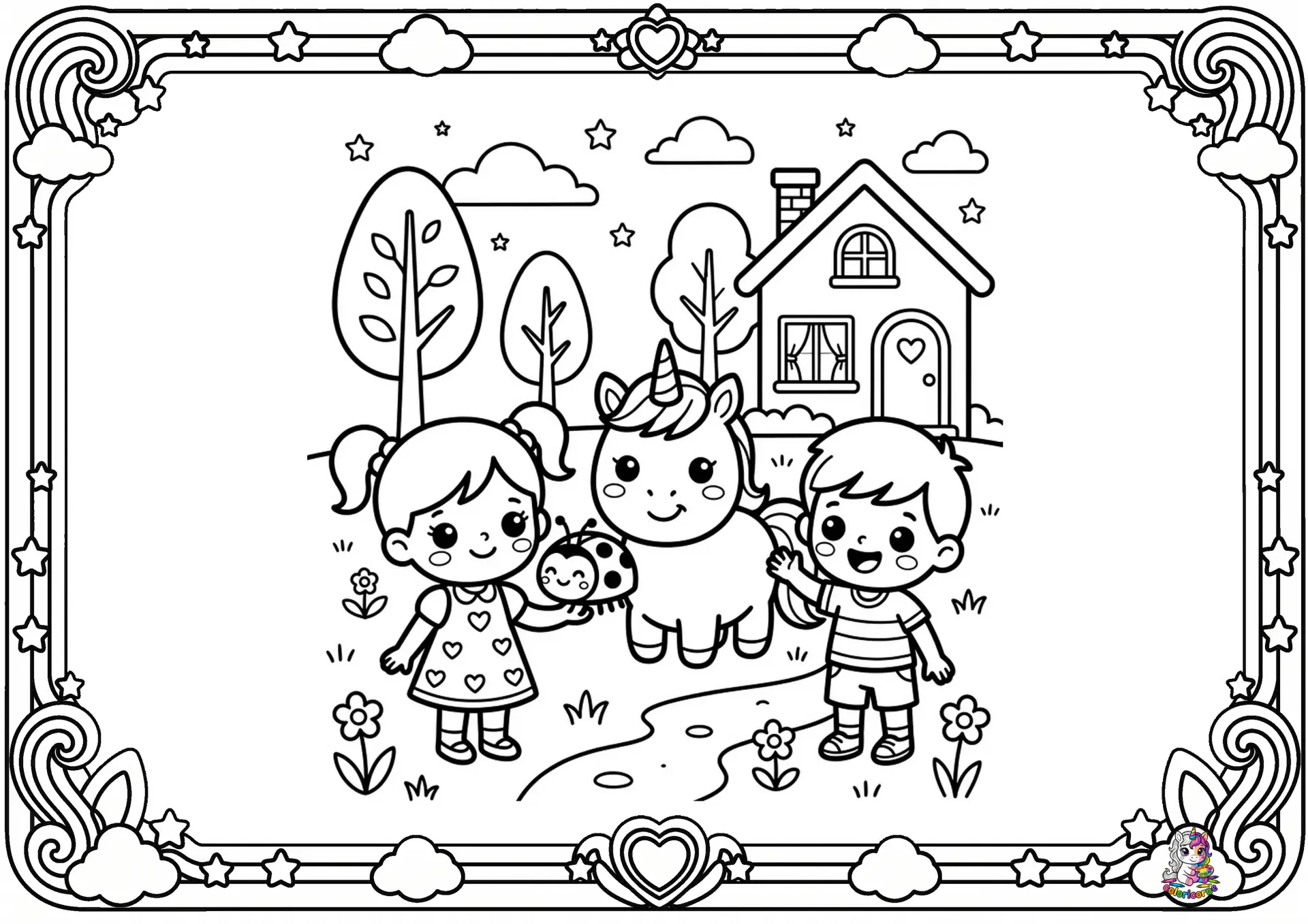 The ladybug in the hand
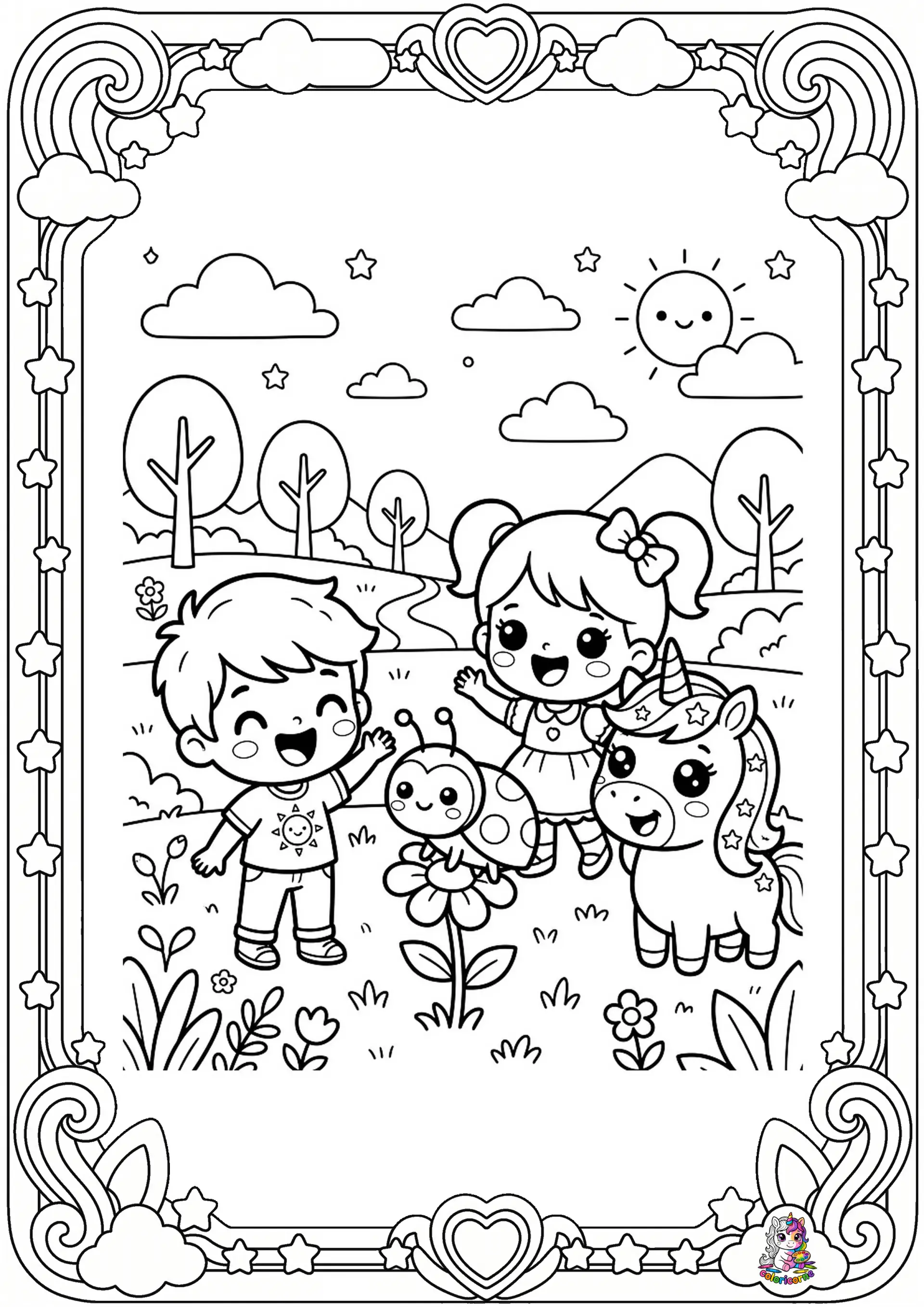 The ladybug on the flower
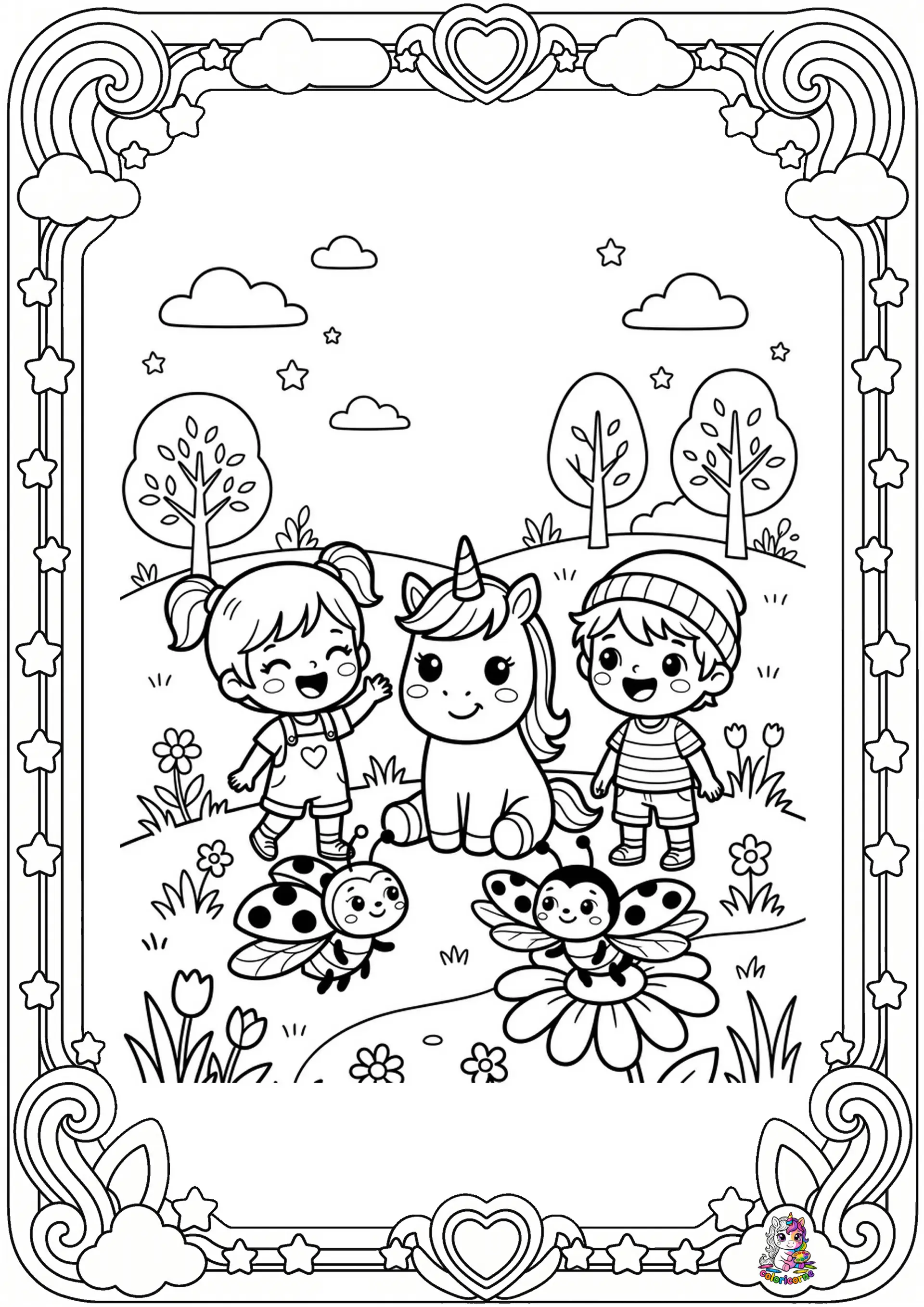 The two ladybugs
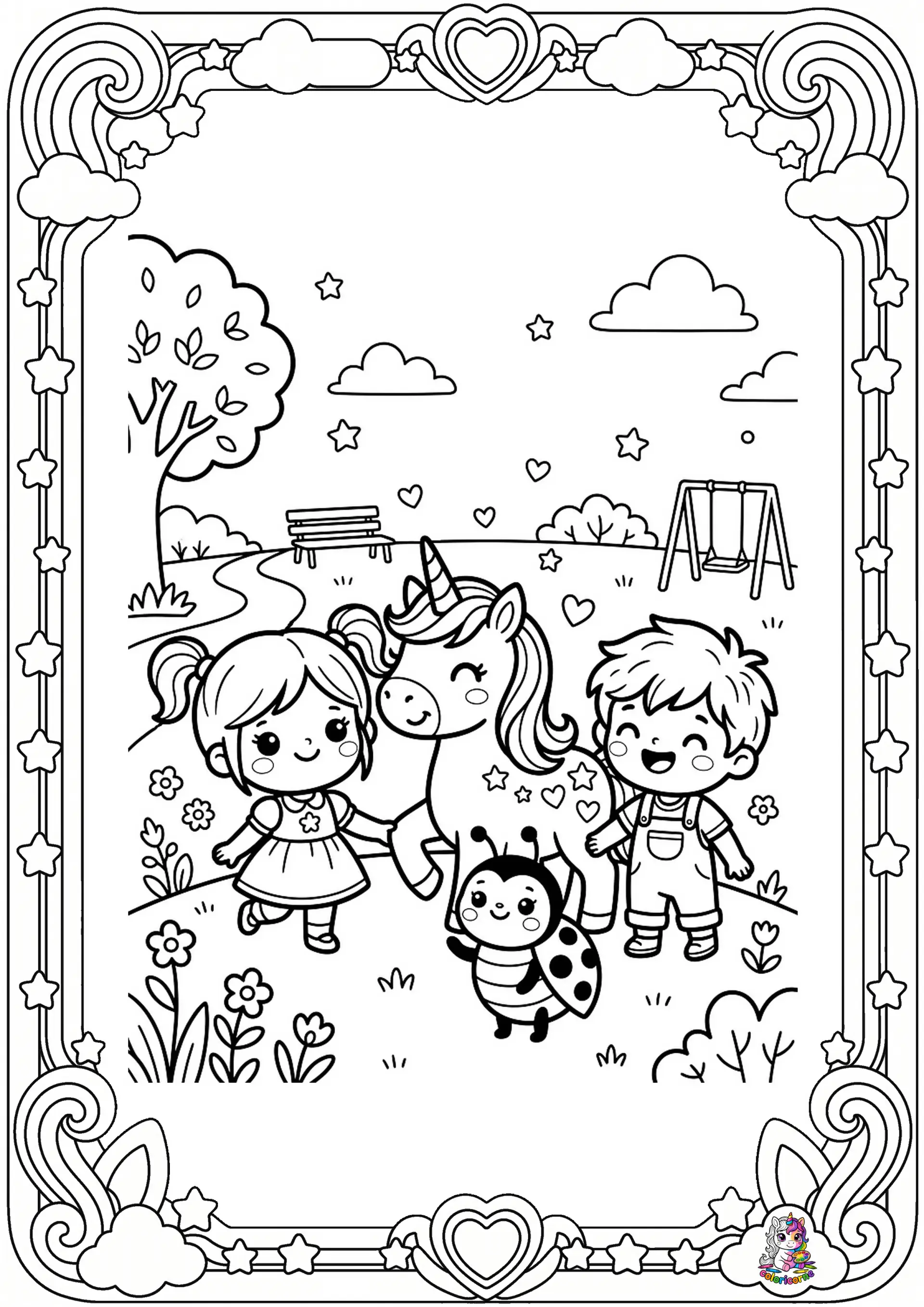 At the park with the unicorn
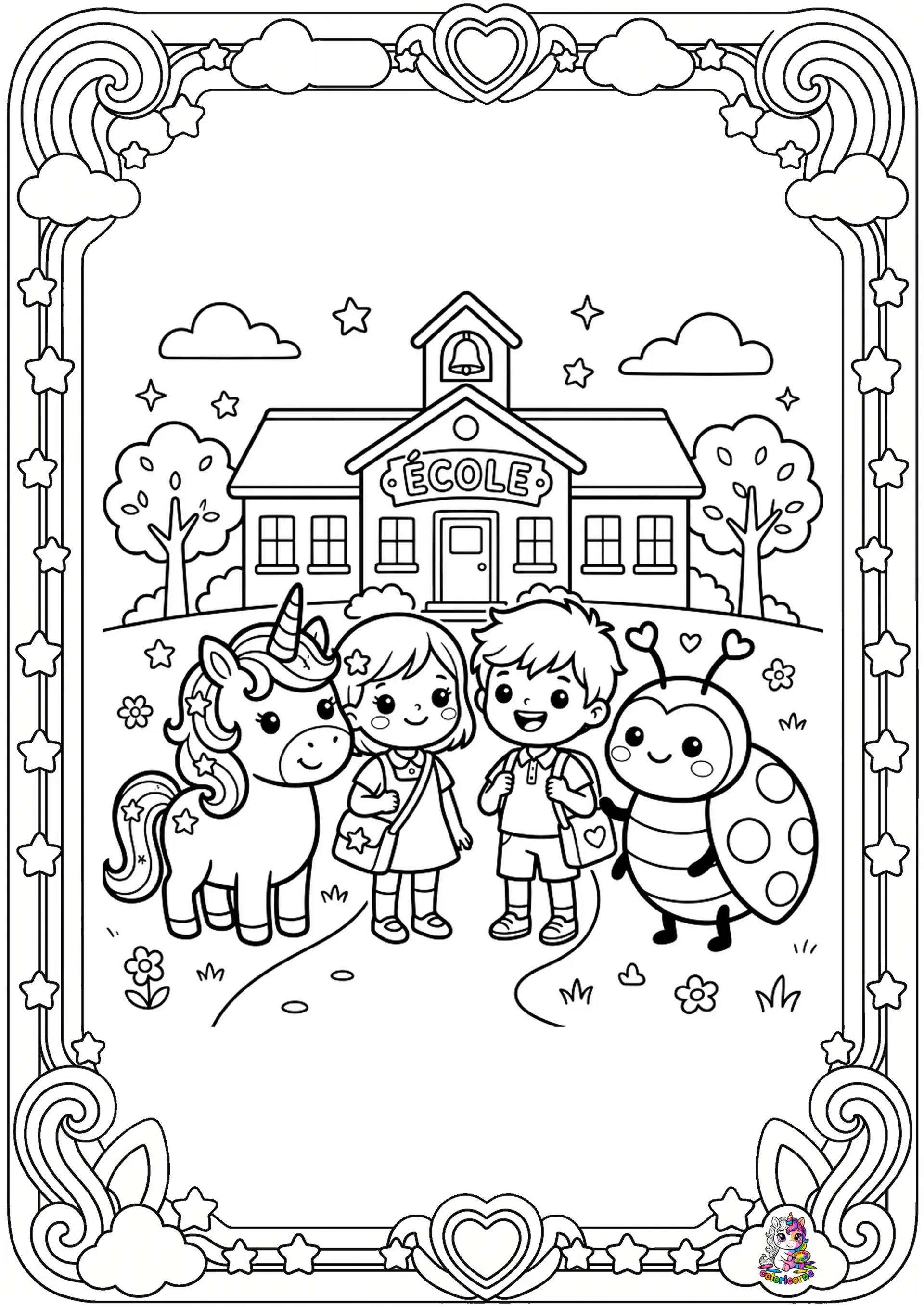 On the way to school
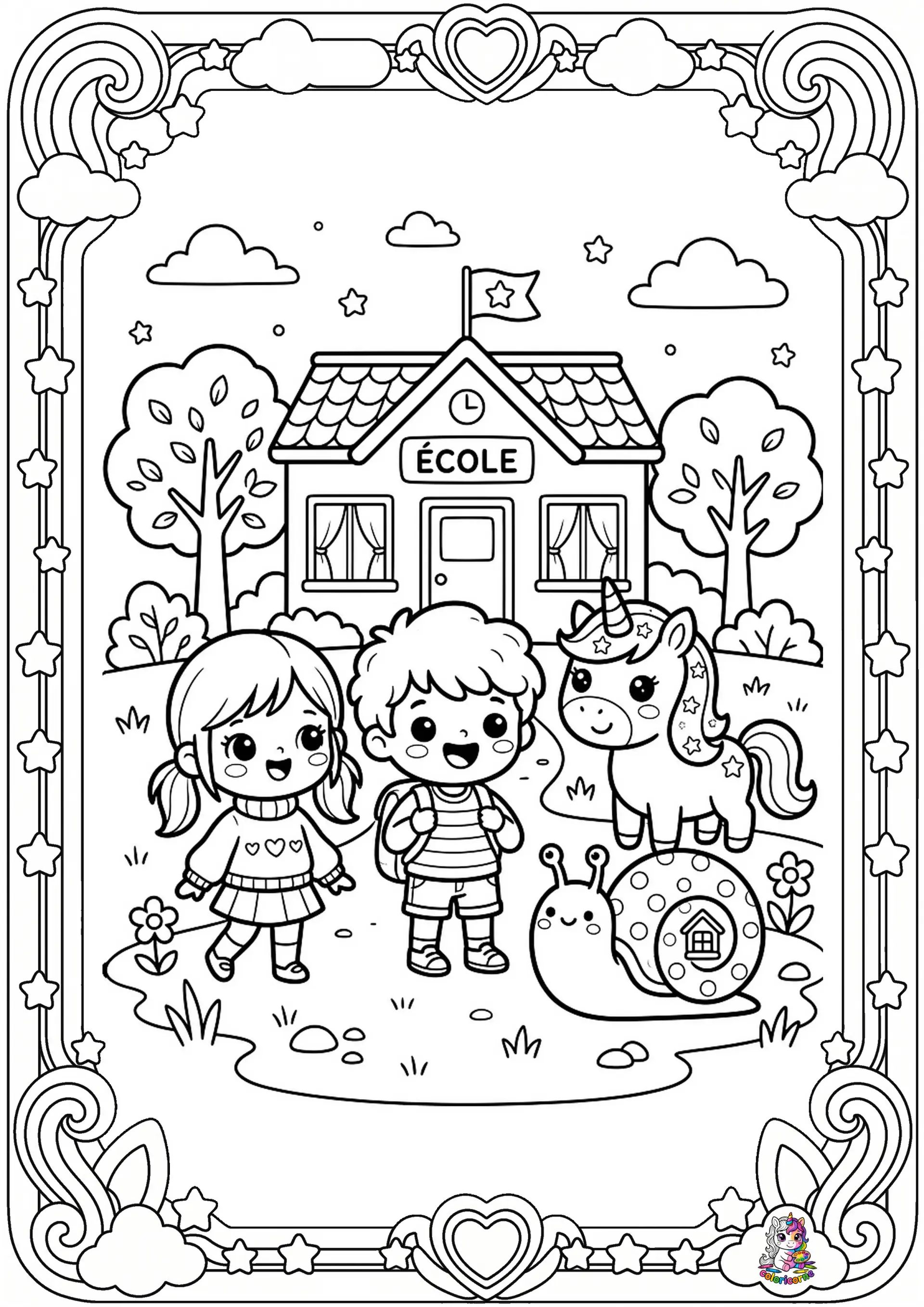 Everyone off to school
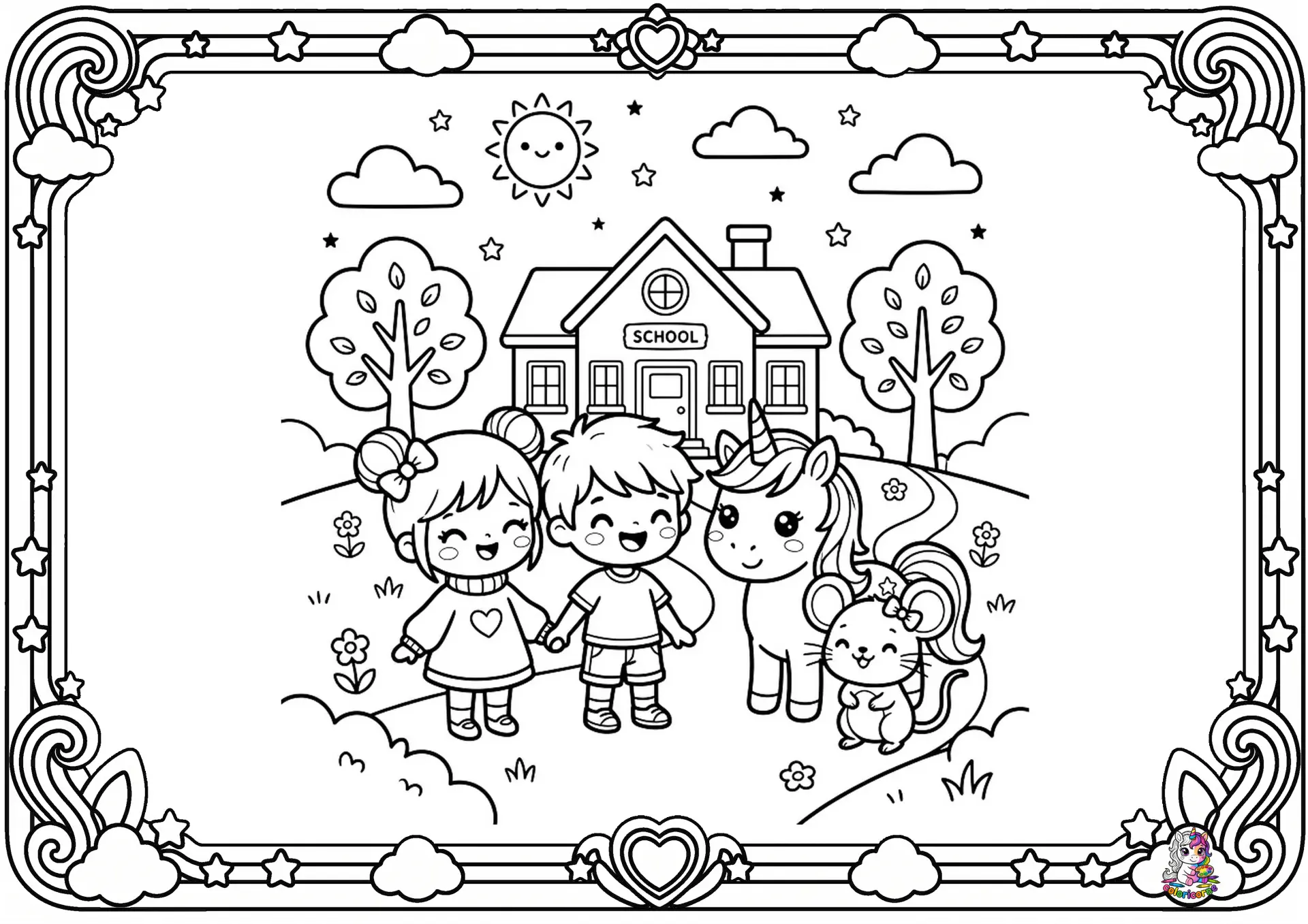 Hello, school
 Back-to-school supplies
 Homework with the cat
 Setting off for school
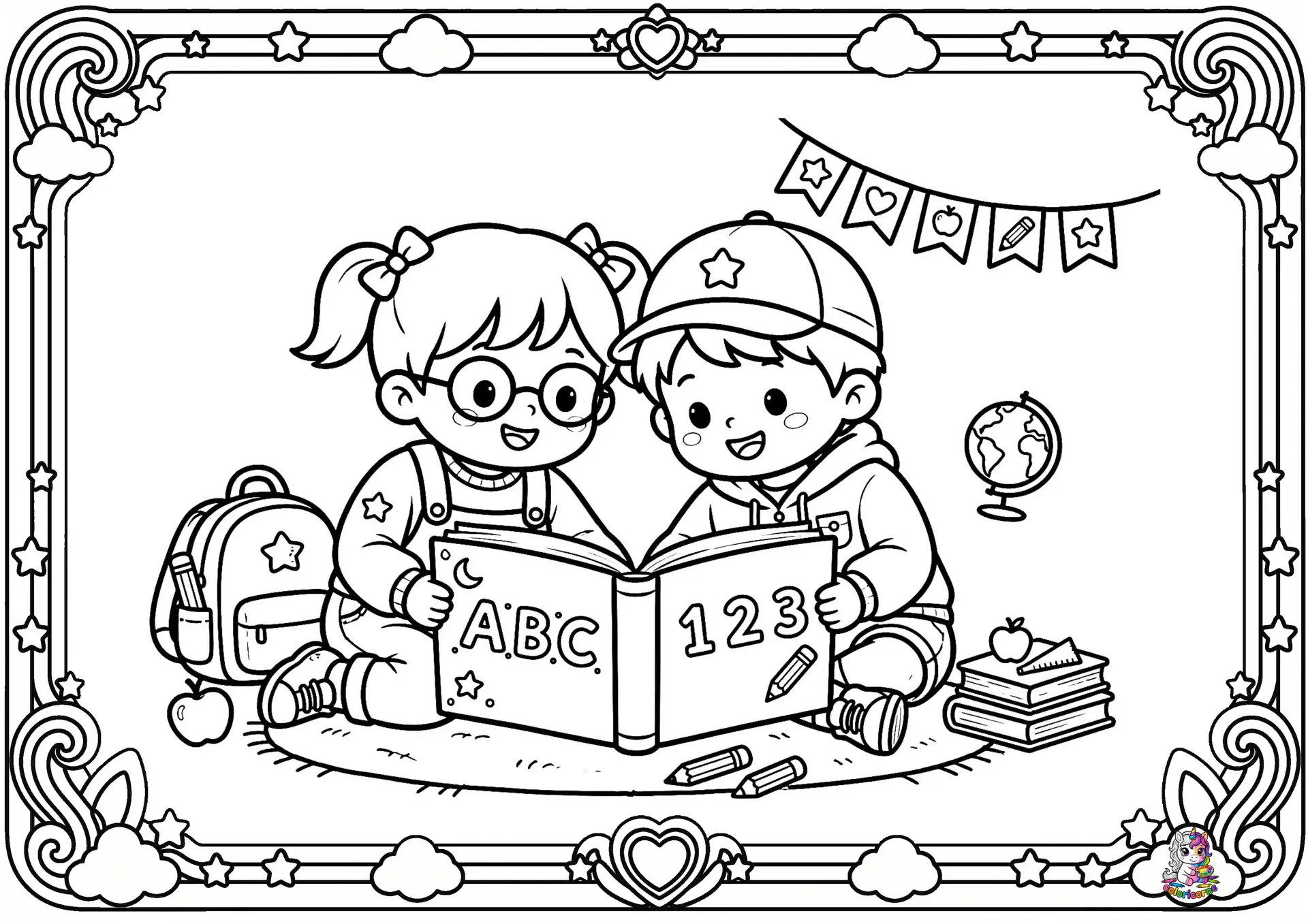 The children reading
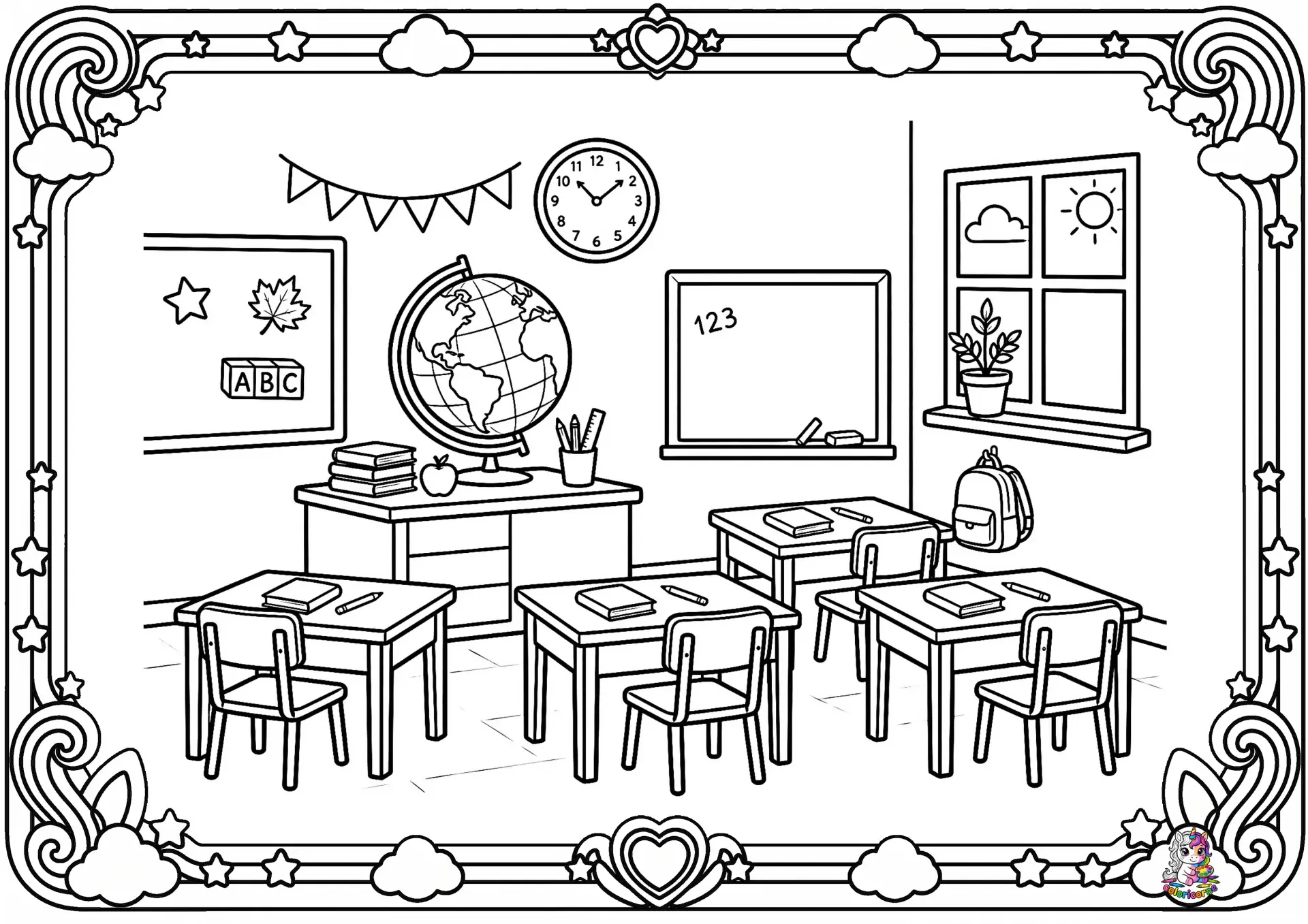 The classroom
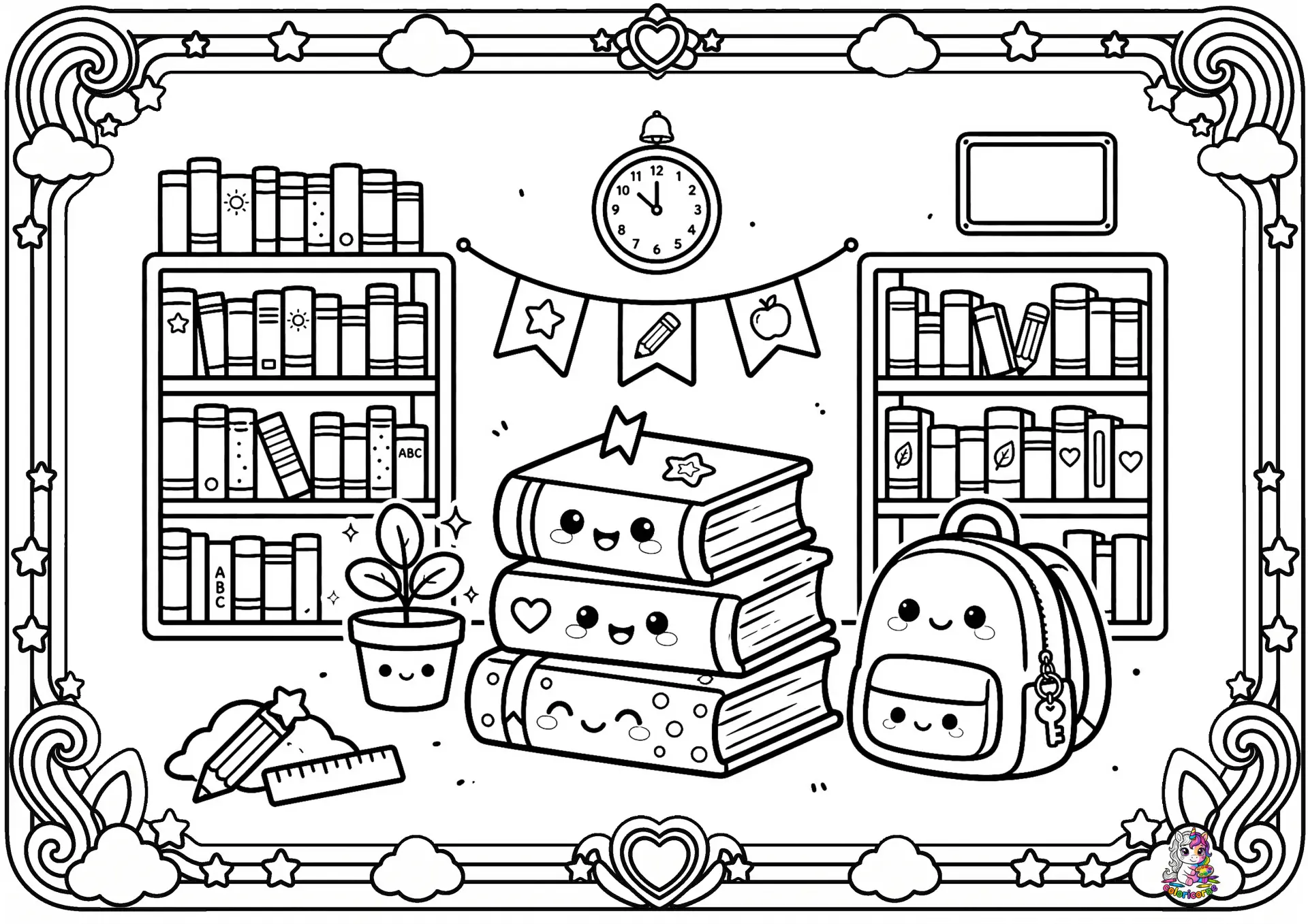 The classroom library
 The full backpack
 The little school bus
 The playground
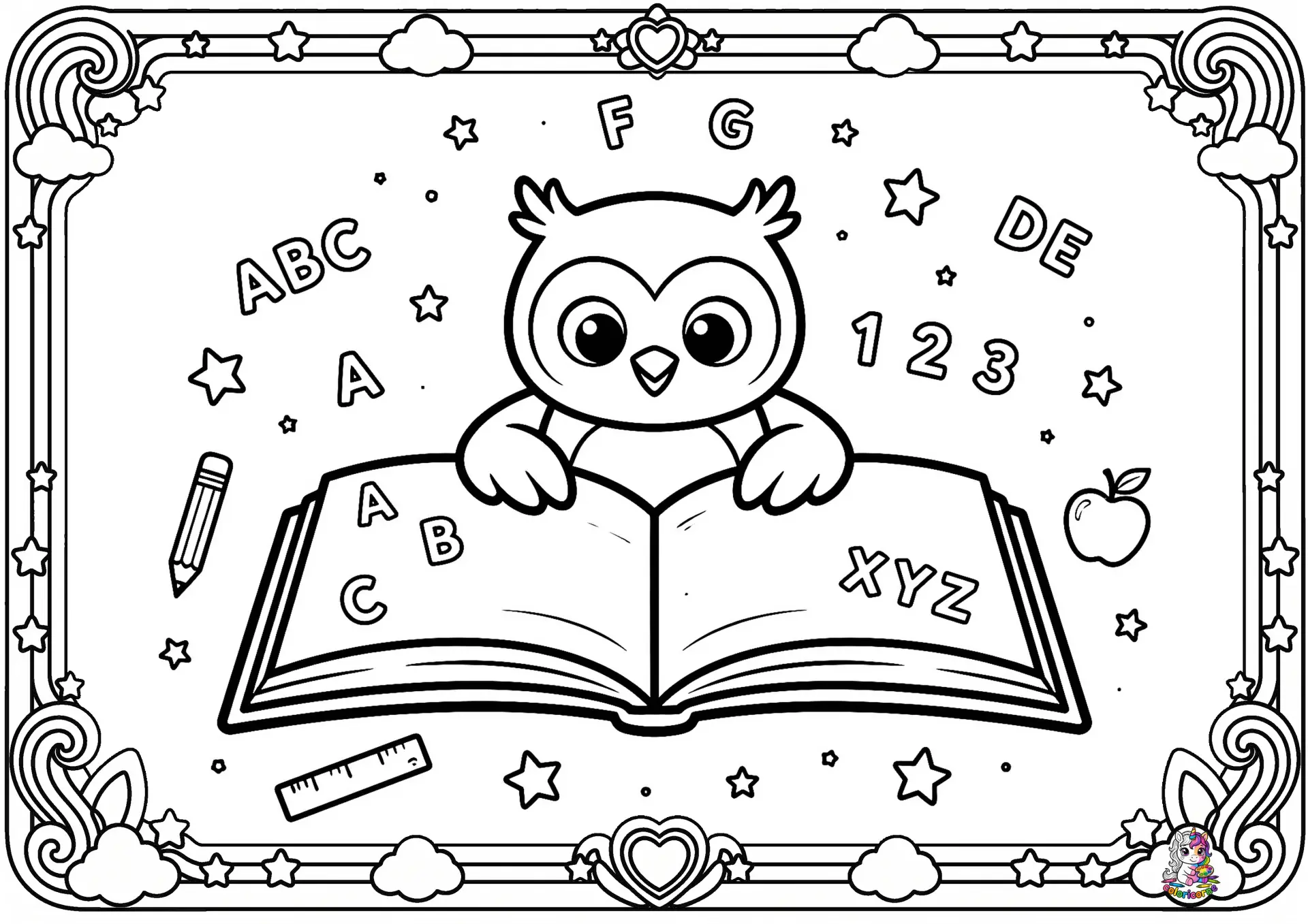 The reading owl
 The school bag
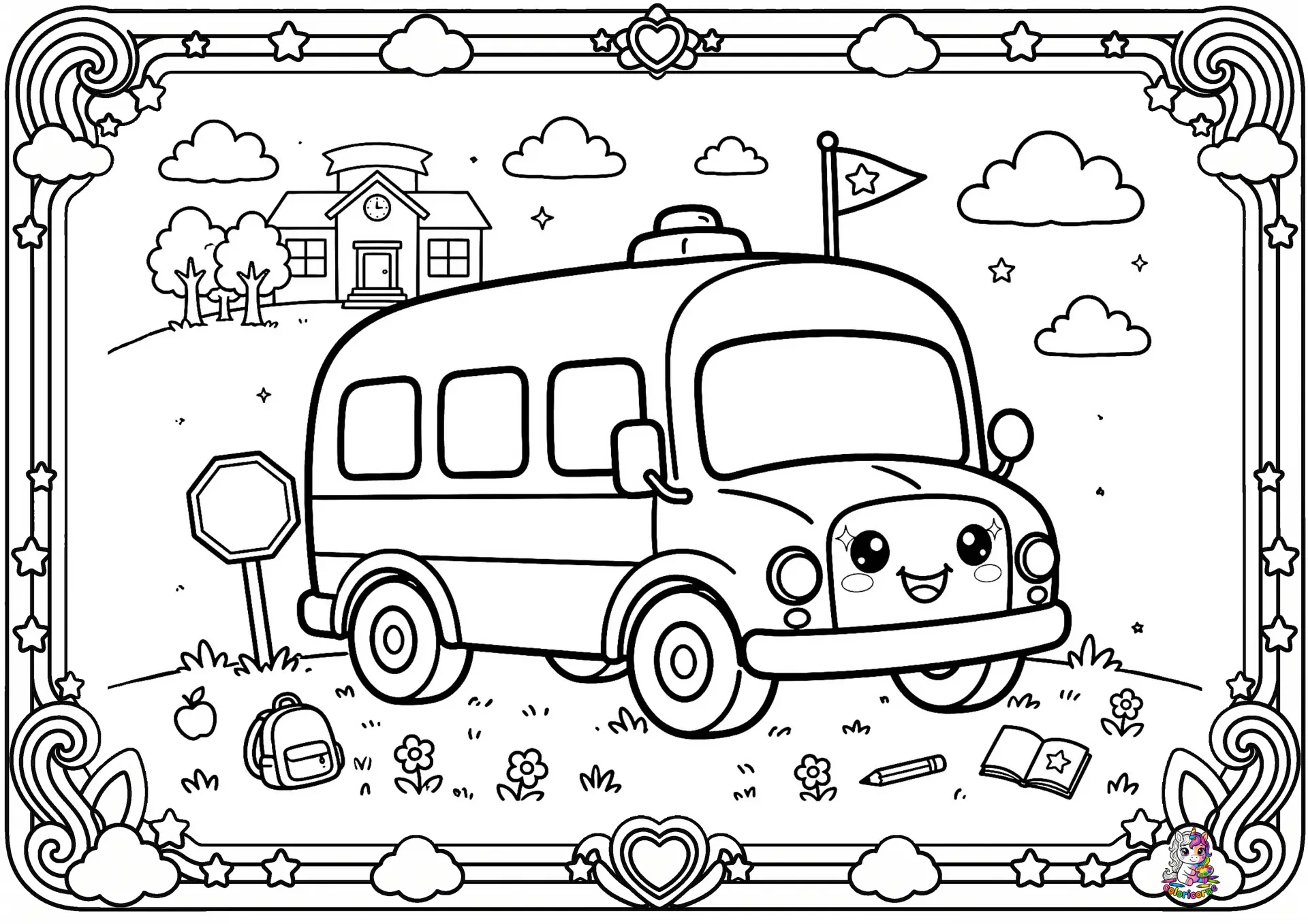 The school bus
 The school playground
 The school supplies
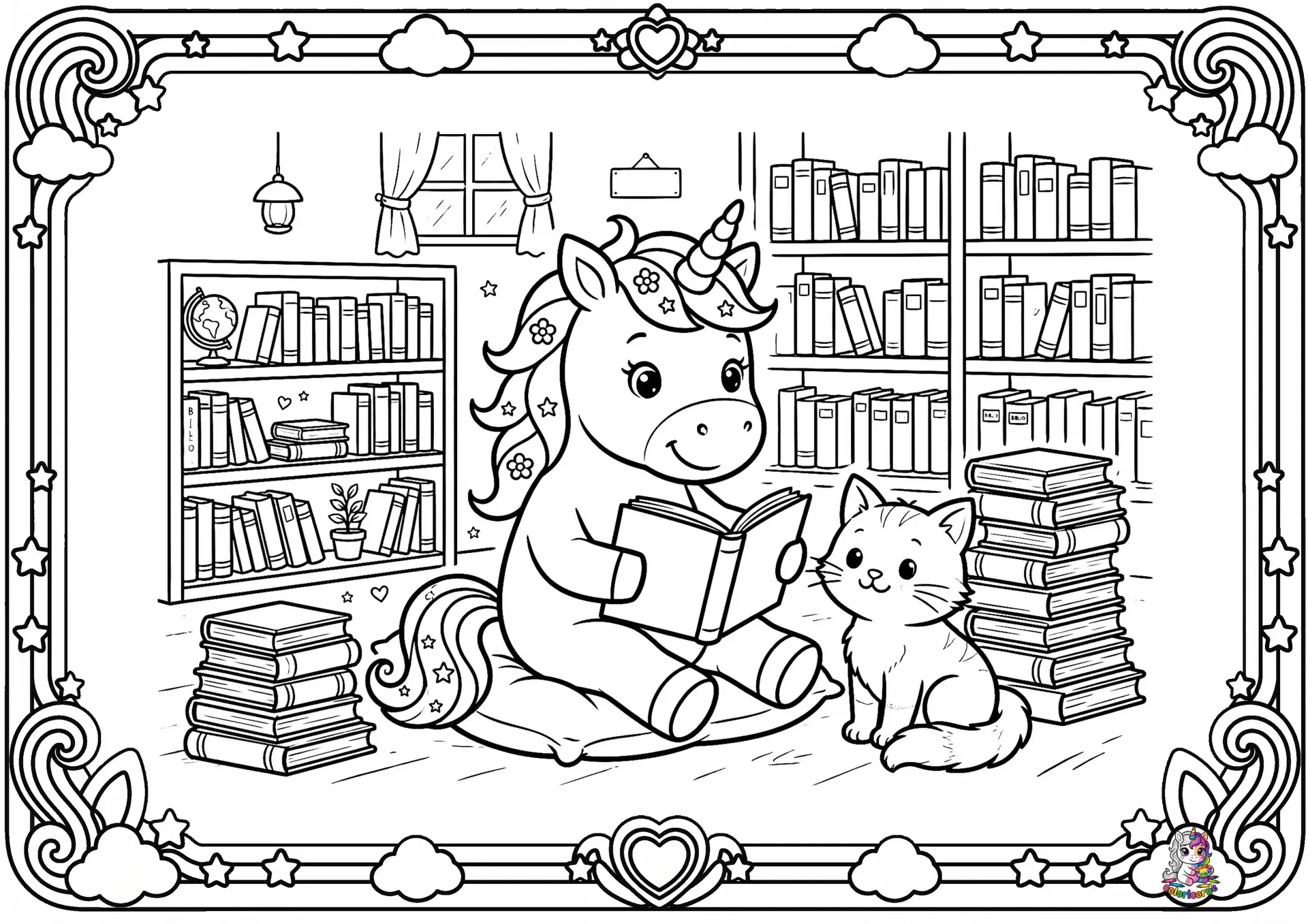 The unicorn at the library
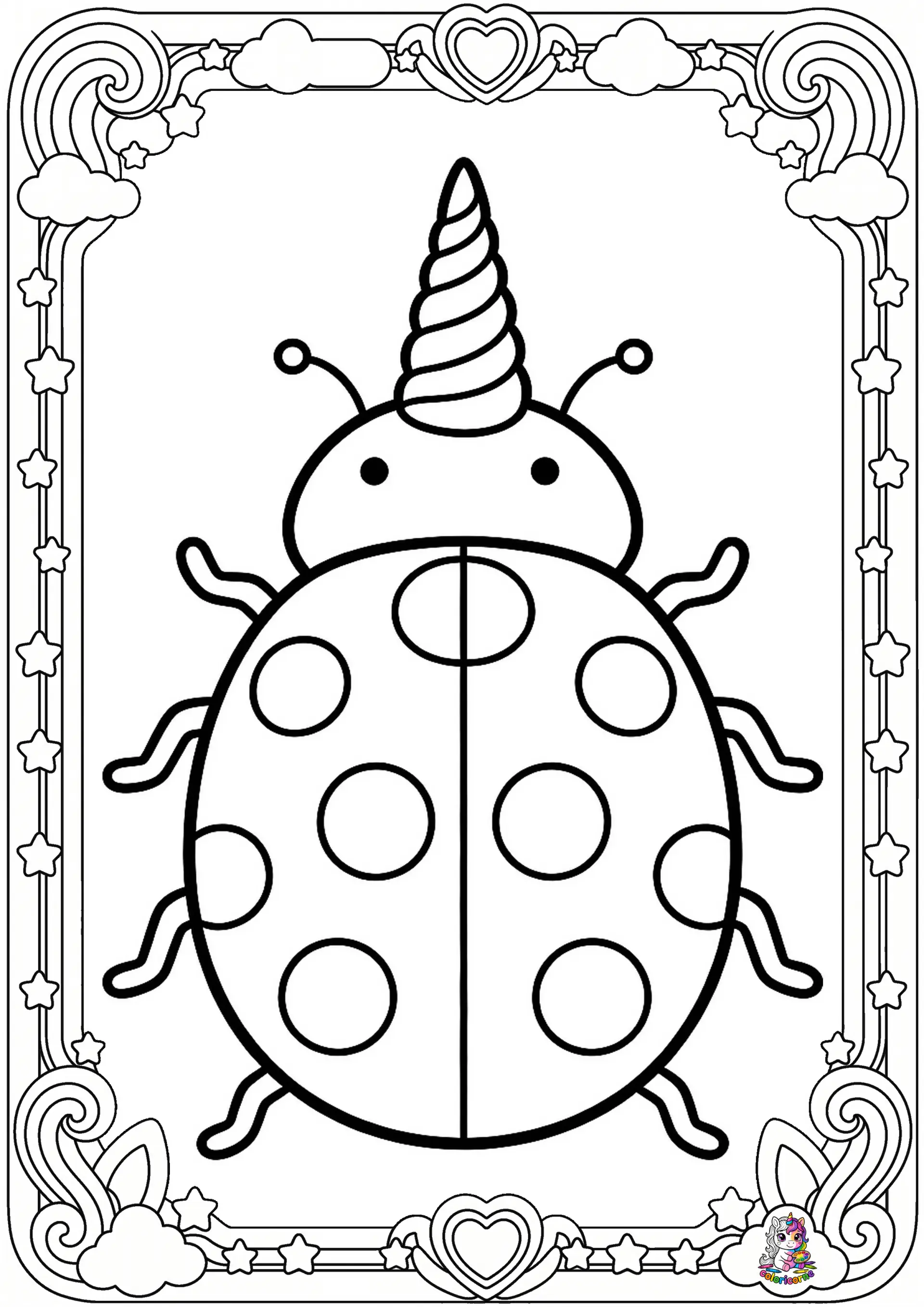 The ladybug
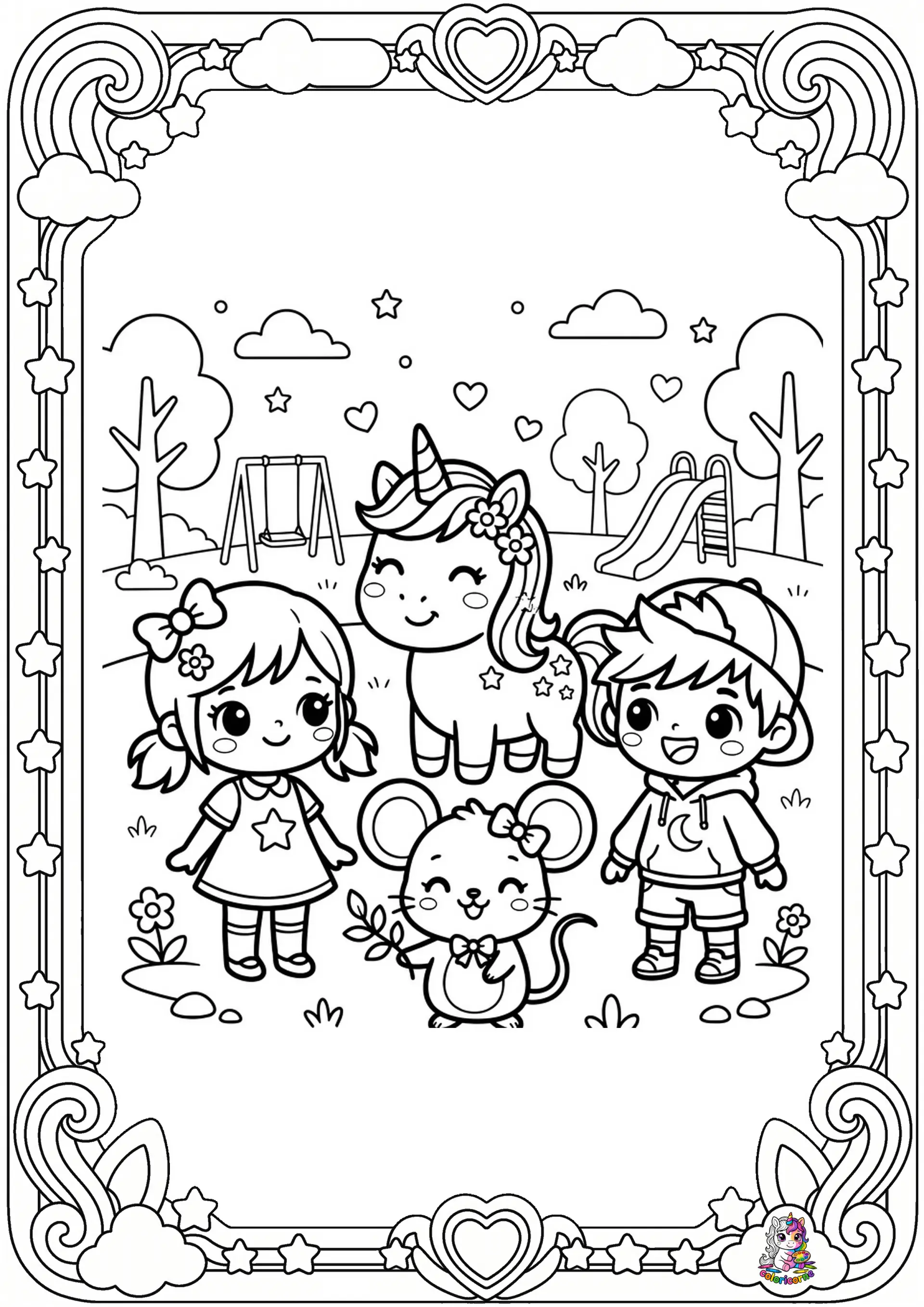 The park under the stars
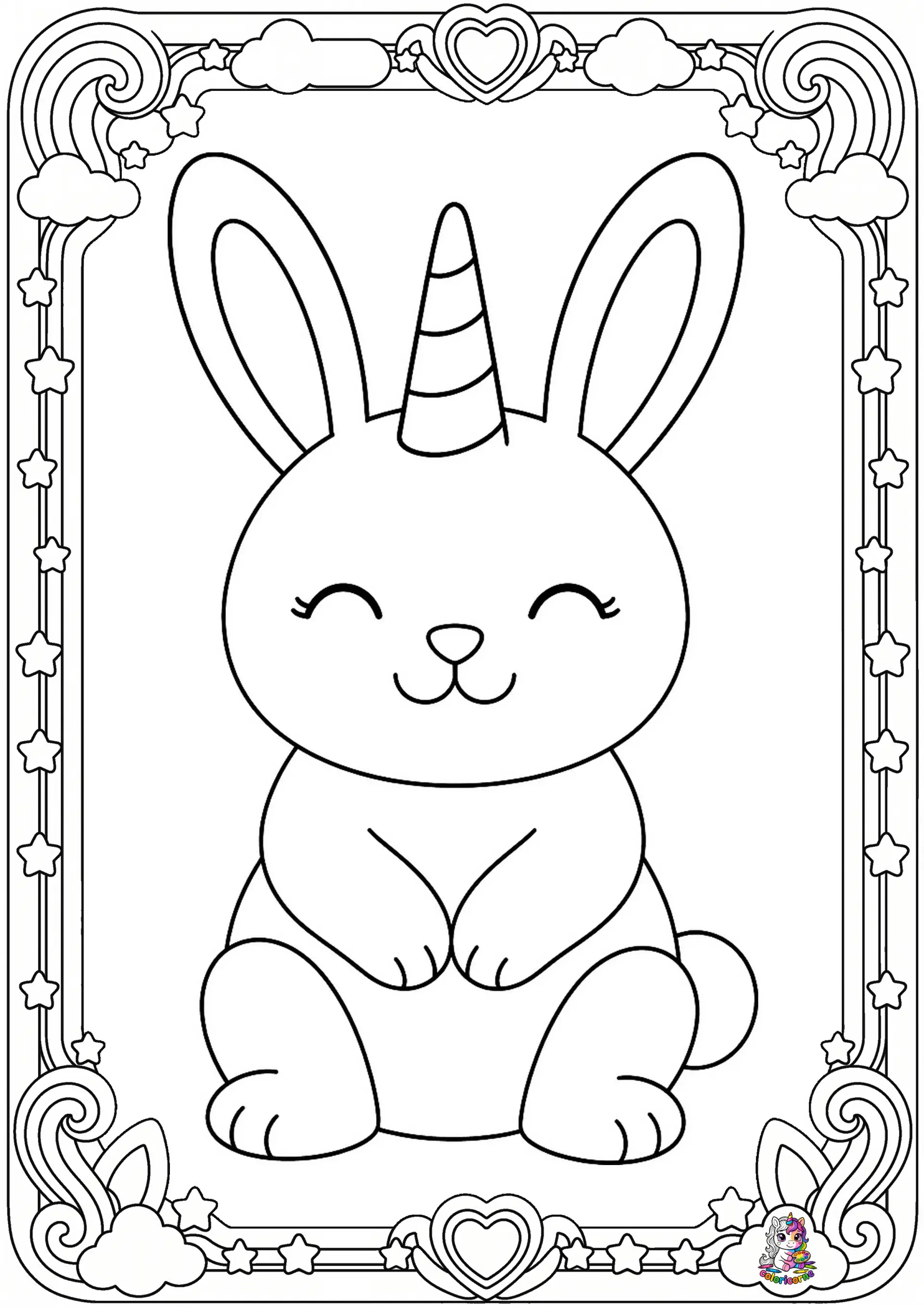 The rabbit
 The turtle
 The owl
Where to go next
- The whole catalogAll the sheets, filtered by theme, age and season.
- Tips for parents and grown-upsPaper, markers, light, and where to set up.
- Coloring pages by ageWhat a sheet asks of a child at 2, at 4, at 6.
- The seriesFive sheets per song.
- Crafts to makeWhat to do with the drawing once it is colored.
- A birthday partyKeeping a table of six children busy with coloring pages.