The ladybug
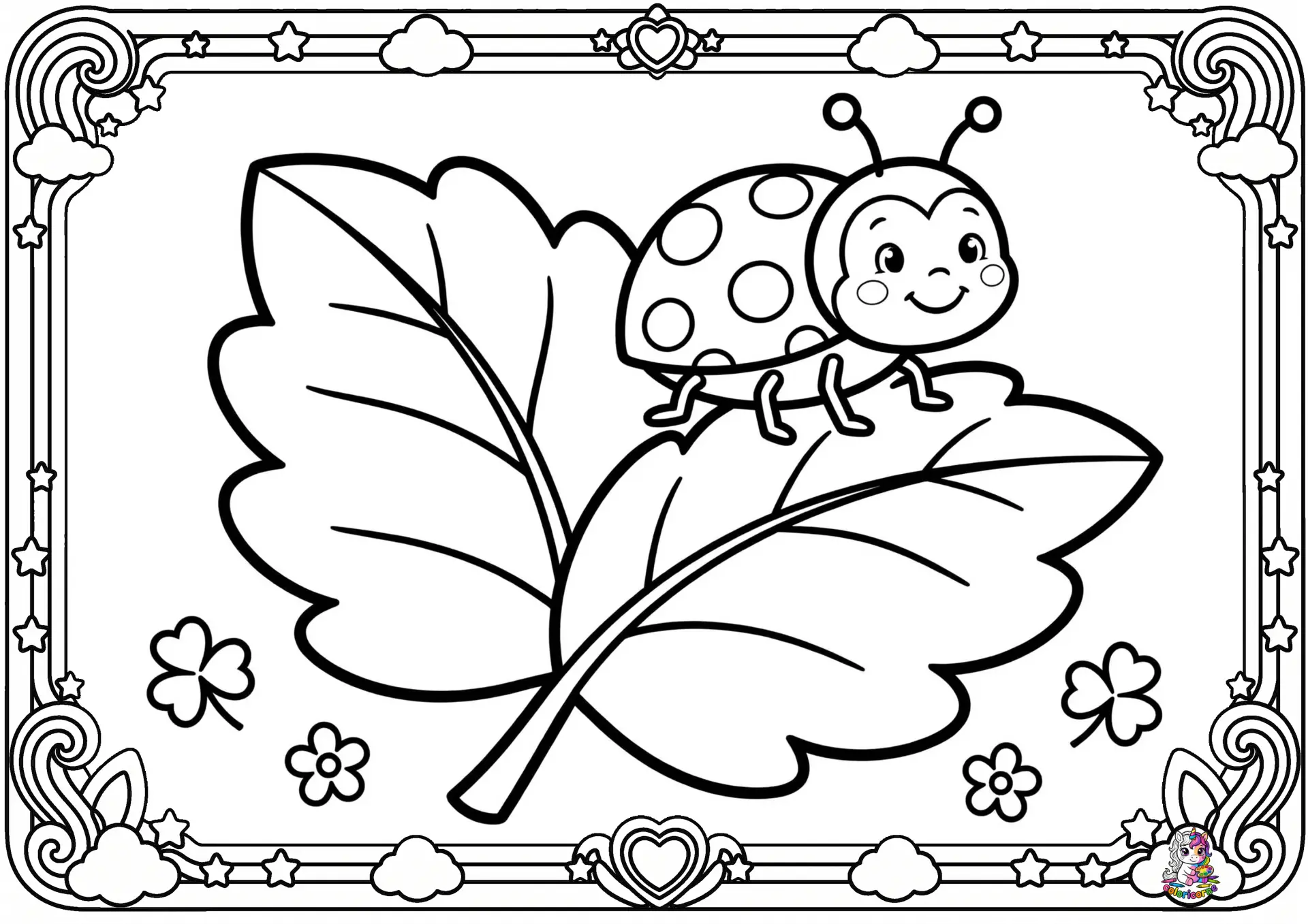
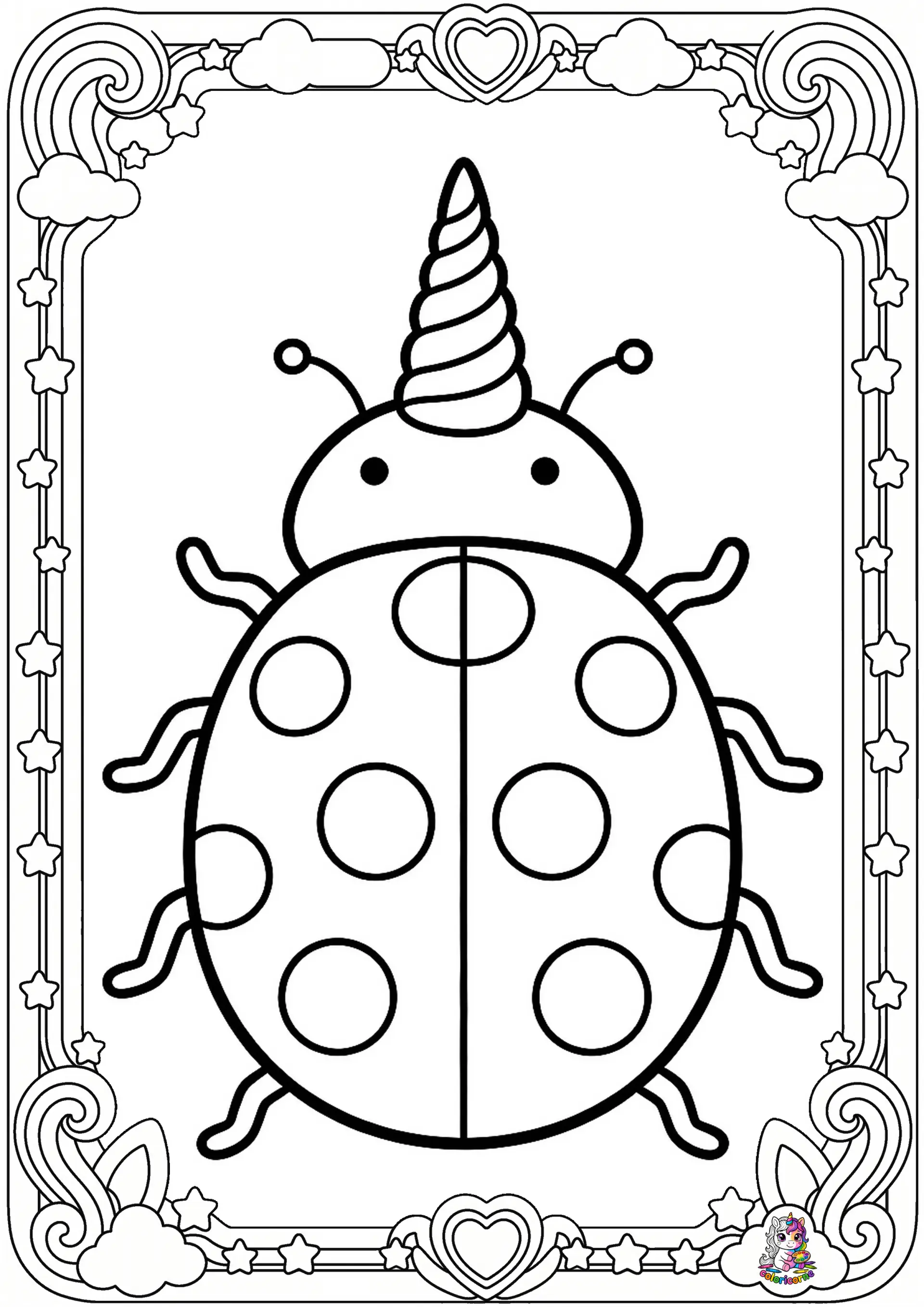
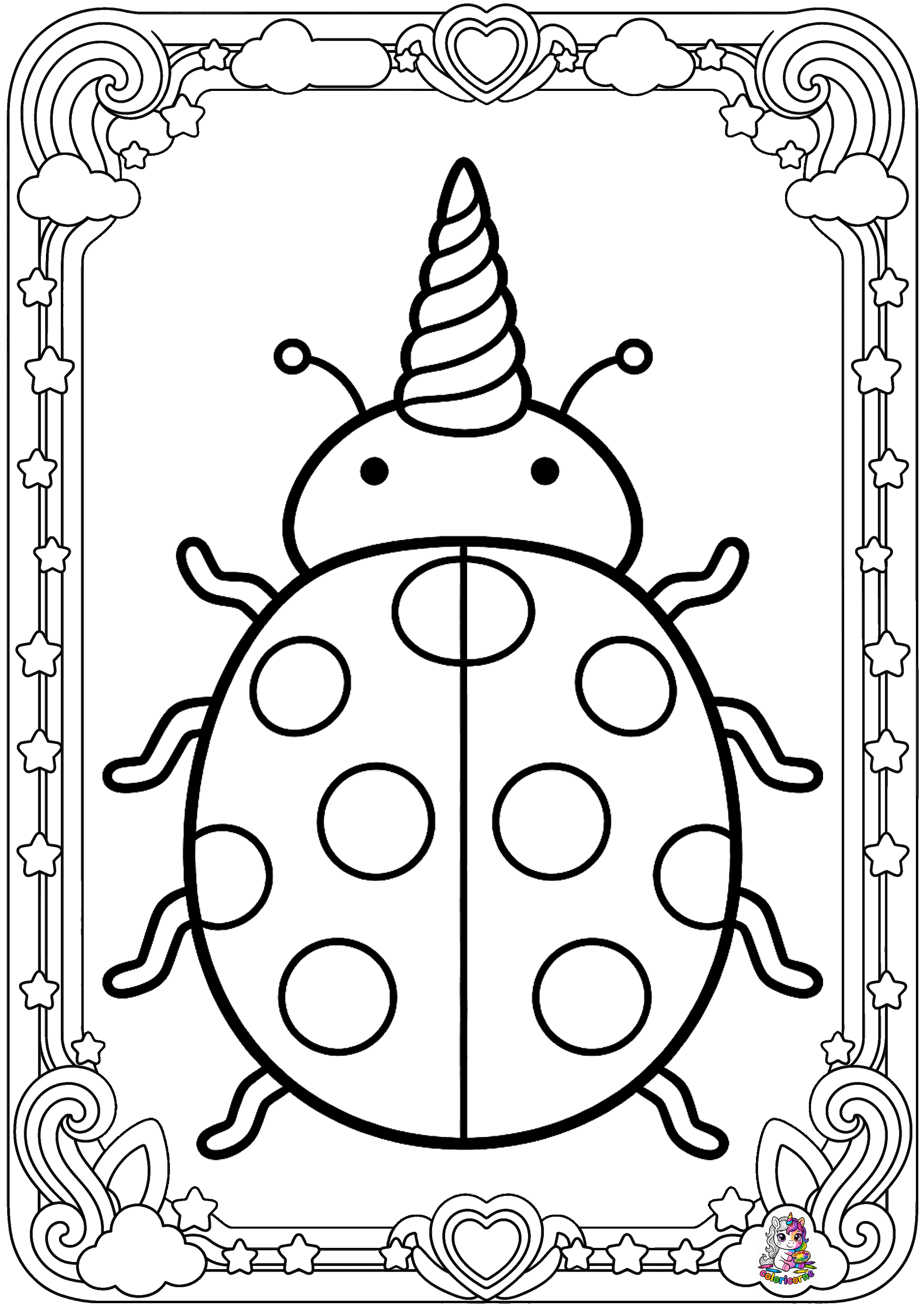
The ladybug: a free printable coloring page, from age 4. A big round beetle, its nine well-spaced spots and a twisted horn on its head.
- Recommended age
- Ages 4 and up · 20 to 40 minutes
- Theme
- Little bugs
- Season
- Spring
A round beetle, seen from above
The ladybug fills the whole page, seen from above, as if laid flat on the sheet. Its back is a large oval cut in two by a vertical line: that is the seam between its two closed wings. Nine spots are sown across it, four on the left, four on the right, and one large oval just under the head. The head is round, with two black eyes and two antennae tipped with a small ball. Eight wavy legs stick out of the body, four on each side. And on the forehead, a twisted horn points upwards.
The bug you let walk on your hand
The ladybug is often the first insect a child agrees to let walk on their hand. It does not sting, it does not run fast, it opens its wings and leaves on its own after a minute. Gardeners like it because it eats the aphids on the roses. Children count its spots and often believe they give its age: that is not true, the number depends on the species. On this drawing, the horn adds the touch of invention the real insect lacks, and it is often the first thing children color.
Everything is bold, and there is a lot of it
Everything is wide here. The two halves of the back are the largest surfaces on the page: a marker fills them in a few passes. The spots are the size of a large coin, far enough apart that going over the line spoils nothing. The outline is thick, it stays visible under the color, and there is neither setting nor background. It is the spots, the legs and the antennae that stretch the work: each one is simple, but there is enough here for a good half hour, and that is what puts the sheet at 4 rather than 2.
Spots first, back afterwards
The reflex is red with black dots, and it works very well. But let your child fill the nine spots first, and the background of the back only afterwards: the other way round, they go back over red that is still wet and everything smears. For the horn, a yellow pencil laid without pressing is enough to lift it off the rest. Fat chisel-tipped markers suit this sheet: the wide edge covers the wings, and the corner of the tip goes around the spots without spilling over.
A word for the grown-up: before the markers come out, count the spots aloud with a fingertip, one by one. Nine in all, four on one side, four on the other, and a big one right at the top. Your child then colors knowing how many are left, and no longer stops halfway.
Coloring pages that go with this one
More pages from the same theme, age or season — the ones you print right after.